
Finding Duluth Residents Carefully
The Duluth residents directory is a set of narrow records, not one master list. Start from the kind of fact at hand. An address is strongest in the St. Louis County parcel and map tools for Duluth. A historic name is often better in a Duluth Public Library directory or obituary index. A specific legal or family event may be located through a Duluth court or Minnesota vital-record index. The Duluth search should produce a lead, then a second source should either support it or show why the match is uncertain. Duluth property ownership, a taxpayer mailing address, and a person who lives at an address are separate facts.
Use a Duluth result only for the question it can answer. St. Louis County provides Duluth property and recorded-document paths, while the Duluth library preserves historical directories and local indexes. Individual voter status is not a public name-to-address directory, and the state voter file has eligibility and purpose limits. Some Duluth records are confidential, absent from a remote search, or simply held by a different custodian. A no-result is a record of that Duluth search, not proof that a person was never in Duluth.
- Put a current Duluth address into the county parcel tools and record the physical address, PIN, tax district, and date checked.
- Compare the returned Duluth owner or taxpayer context with a deed instrument rather than treating either as proof of occupancy.
- For a past Duluth household, search the library directory run in nearby years and note any missing issue.
- Use a Duluth court, obituary, marriage, or vital index only as a locating lead, then request the record from its custodian when proof matters.
- When a Duluth online route ends, make a narrow Minnesota Government Data Practices Act request that names the office, period, record type, and fields needed.
Duluth Resident Records Offices
Several offices near the Duluth Courthouse keep records that can establish a limited connection between people and places. The Recorder and Registrar of Titles at the Duluth Courthouse handles recorded land documents. The St. Louis County Assessor’s Duluth office keeps parcel and property-detail context. St. Louis County Elections serves Duluth registration and precinct needs under Minnesota rules. None keeps a complete living-household register. Bring the Duluth record type and a date range to the right office, especially when an older document or certified copy is needed. For a longer address chain, use the Duluth street directory research path.
St. Louis County Recorder / Registrar
100 N 5th Ave W #101
Duluth, MN 55802
218-726-2677
St. Louis County Assessor
Duluth Courthouse, Room 212
Duluth, MN 55802
218-726-2304
St. Louis County Elections
County elections office
Duluth, MN
218-726-2385
Duluth Address Records and Parcel Clues
St. Louis County Property Details Search is oriented to a Duluth parcel or physical address, not to a broad person-name lookup. It reports daily updates and lets a user work with a Duluth address, City, Parcel ID parts, plat, sale-date and price ranges, construction year, gross area, style, and units. The county’s own Duluth address tip is useful: if a full address misses, try the number or a shortened, officially abbreviated street. Confirm the Duluth return against the map before carrying it into another record system.
| Property Details field | How it works in a Duluth search | Use with care |
|---|---|---|
| Duluth physical address | Enter a number or abbreviated street segment | It is not a resident-name field |
| Duluth Parcel ID | Use the CVT, Plat, and Parcel parts | Keep the full PIN with the source date |
| Duluth plat | Narrows a legal area | Compare it with the parcel record |
| Duluth sale and construction ranges | Filters property characteristics | They do not identify a current household |
Land Explorer adds Duluth parcel outlines, address points, roads, zoning, public-land layers, and historic imagery. Its help materials warn that a Duluth physical address, an owner address, and a taxpayer address may differ. A parcel can also carry more than one physical address, while only an arbitrary primary one is searchable in the widget. That Duluth mismatch is a reason to collect every field rather than force a match.
- Duluth parcel or PIN
- A county identifier for a taxed piece of land, used to connect Duluth map, tax, and property-detail records.
- Duluth physical or situs address
- The location of the property, which may not be the taxpayer’s mailing address.
- Duluth recorded grantee
- A party named in a recorded instrument. That name documents the transaction, not necessarily a current occupant.
- Duluth index
- A finding tool that points to a record. It is not the same as a certified copy or an image.
Duluth Parcel Addresses Do Not Always Match
A practical Duluth residents directory search needs a Duluth address identity card. Record the USPS-formatted mailing address, the county physical address, PIN, taxpayer mailing address, owner or grantee, ZIP code, neighborhood, precinct, source, and date checked. Those labels stop a Duluth searcher from mistaking a tax contact for a resident or a ZIP for a city boundary. Land Explorer can link a selected Duluth parcel to Tax Lookup and Property Details, and the county notes that its parcel information is informal rather than a title, survey, or appraisal.
For a Duluth address with a strange result, use the map and road layers first. Next, compare the legal description or plat against the tax card. Only then move to a deed or permit. That Duluth sequence is slower than copying one field, but it is much less likely to blend two buildings, an owner’s mailing address, and a different household into one false record.
Note: Keep a dated record of search spellings, filters, and result counts so a later no-result can be understood rather than guessed at.
Current Duluth Resident Rolls
The current Duluth residents directory has useful pieces, but each one is limited. Duluth property and tax records describe parcels, ownership, and taxpayer context. Duluth recorded instruments show parties to a land transaction. State voter tools address a voter’s own status, while an eligible voter may request a regulated public information list. Duluth city permit records can be relevant to a property, but they do not substitute for a household list. The right Duluth source depends on whether the question is about a parcel, a historic household, a civic record, or a named court matter.
| Duluth source | What the record can establish | Custodian | Access route |
|---|---|---|---|
| Property and tax cards | Parcel facts, taxpayer context, and property characteristics | County Assessor | Online tools, office, or data request |
| Recorded land instruments | Grantors, grantees, legal descriptions, and recording data | Recorder / Registrar | RecordEASE subscription, terminal, copies |
| Voter information | Individual status or an eligible requester’s permitted list | Secretary of State and county Elections | MNVotes or statutory request |
| City permits and property history | Work, licenses, plans, inspections, or property context | Duluth CSI and City Clerk | ePlace, City Hall, request |
| Library indexes and directories | Historical names, addresses, newspaper, and vital leads | Duluth Public Library | Library, local history, and databases |
A current Duluth parcel card cannot settle who occupies a building, and a Duluth directory entry cannot establish title. Treat them as complementary sources. The most useful Duluth records are tied together by a date, address, PIN, legal description, document number, or another stable fact. No unrestricted Duluth citywide resident directory, citywide staff directory, public ZIP-wide owner export, or confirmed municipal cemetery name search was located in the research.
Duluth Voter Data Has Narrow Rules
Minnesota separates an individual voting-status tool from the statutory voter-list process. The Minnesota voter lookup helps a person check registration and polling information; it is not a public person-search directory. Under Minn. Stat. §201.091, the master list and public information list have different access limits. A registered Minnesota voter who meets the permitted-purpose rules can request a list through the Secretary of State, but a request is not a license to turn civic data into a broad household profile.
The captured Minnesota voter-status screen shows the individual service route. It is useful for understanding why a searcher should not expect a general name-and-address directory.
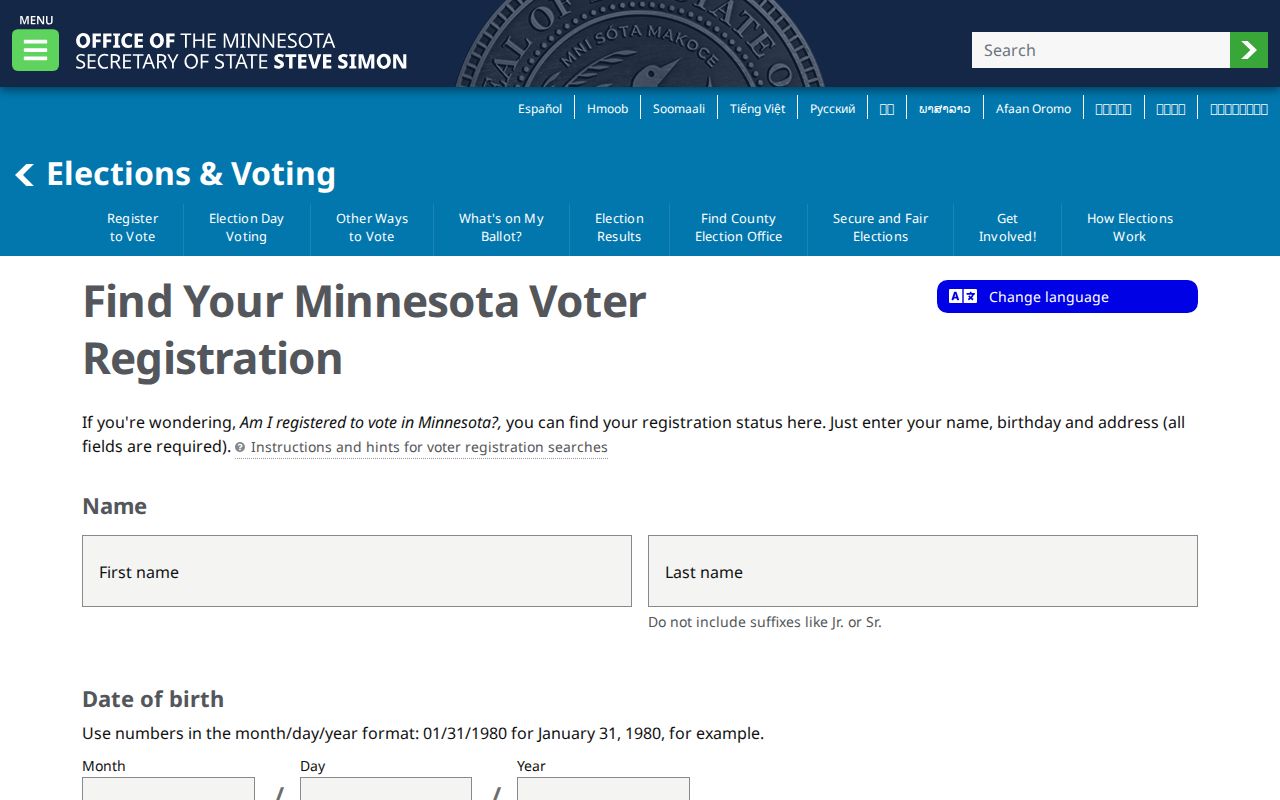
Use voter information only within the applicable law and request terms. Safe at Home uses assigned substitute addresses, so an address that looks public can still protect a participant’s actual location.
The Minnesota voter-list request page shows the separate eligibility-and-certification route for a permitted list request.
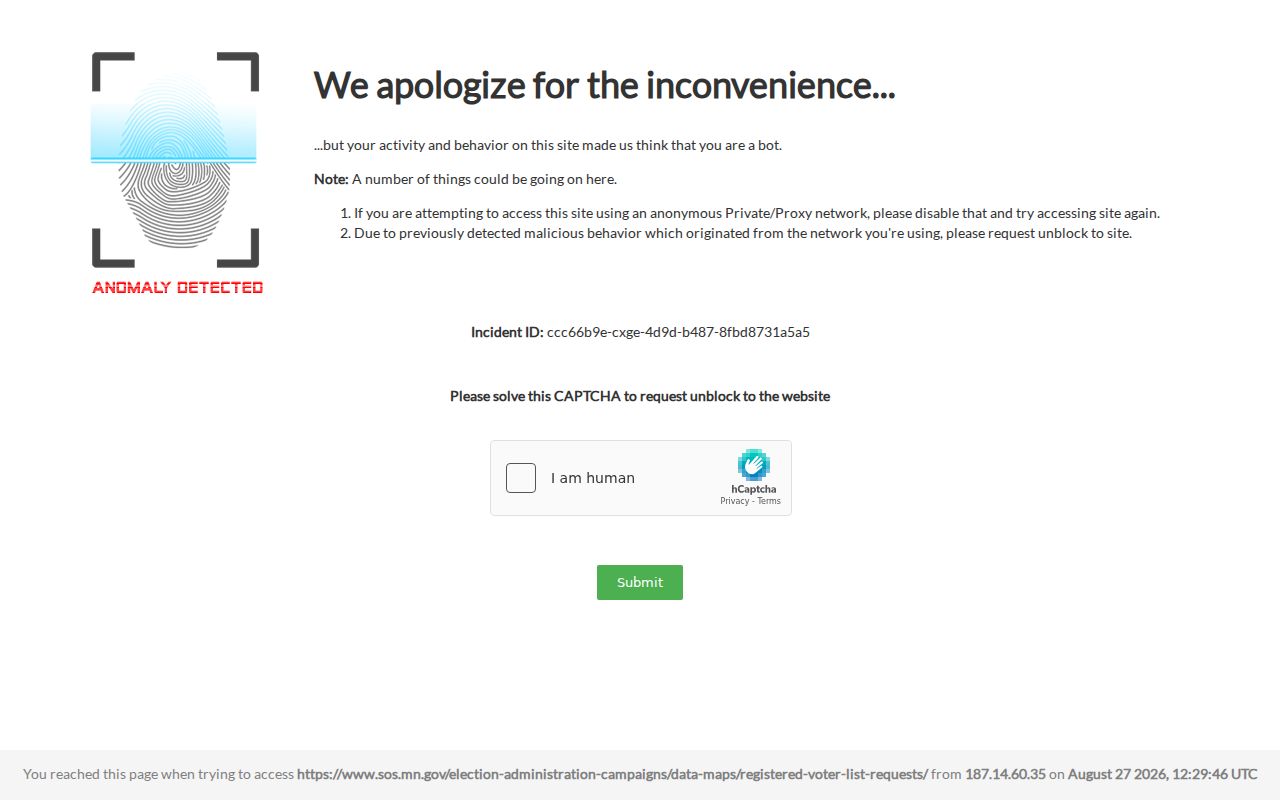
A request can include voter data only under the statute’s permitted conditions, so it should not be treated as an open resident directory.
Duluth Resident Court and Vital Leads
The statewide Minnesota Court Records Online service, commonly called MCRO, supports Name, Case Number, Citation Number, and Attorney searches. Name searching can use last, first, and middle names, a trailing wildcard after two characters, or a Sounds Like option. Date-of-birth and filing-date filters can help narrow a match, but a name result is not identity proof. Remote results also omit some protected categories and party-address data. The Duluth courthouse has public-access computer service, and certified copies come through court administration.
The MCRO interface below is the official name-search starting point. Record a case number and compare the available case details instead of treating a shared name as a confirmed person.
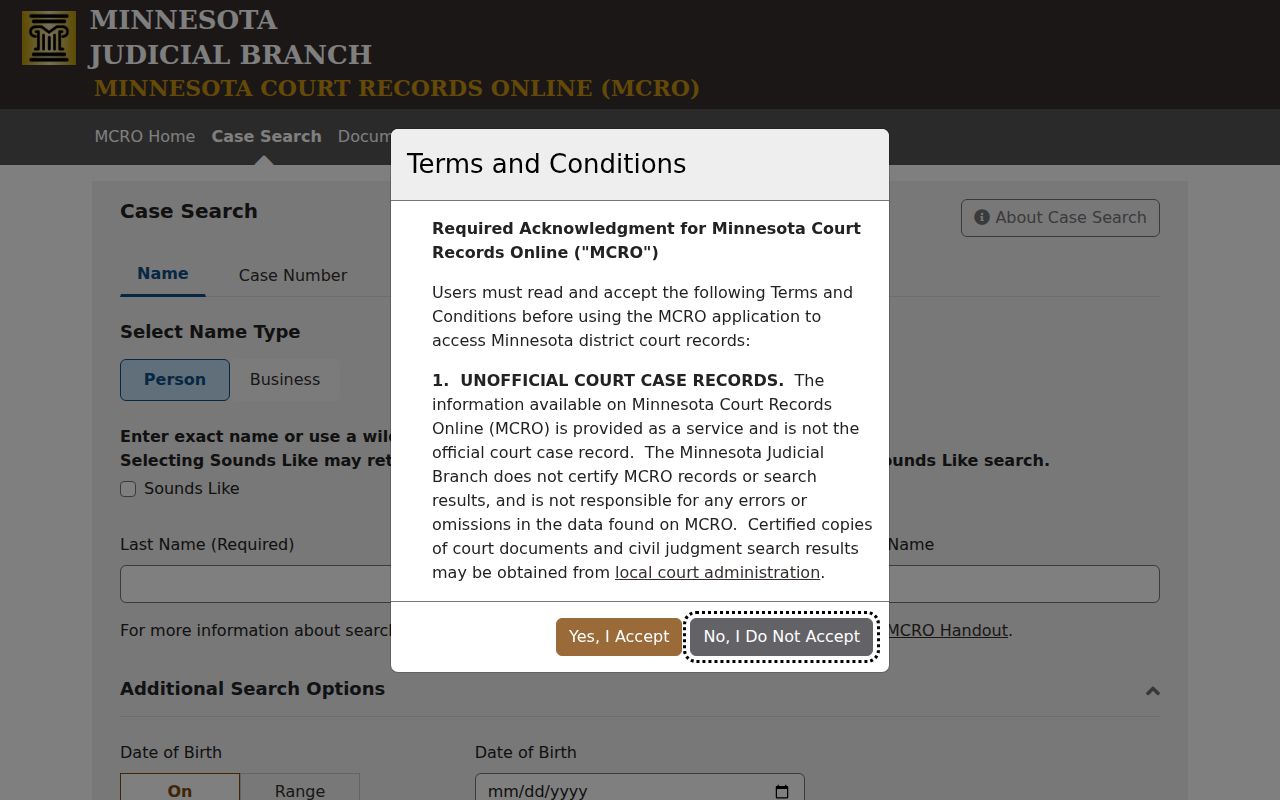
For life events, the Minnesota Official Marriage System is an index rather than a certificate. Death records have their own public and certified-copy rules, and birth records carry tangible-interest and confidentiality limits. The Minnesota vital records service explains statewide ordering by mail or fax, while county offices can often be the faster route for a permitted request.
The vital-records access screen points to the official ordering rules. A certificate or court copy should be requested from the custodian when an estate, family-history, or other formal matter needs proof.
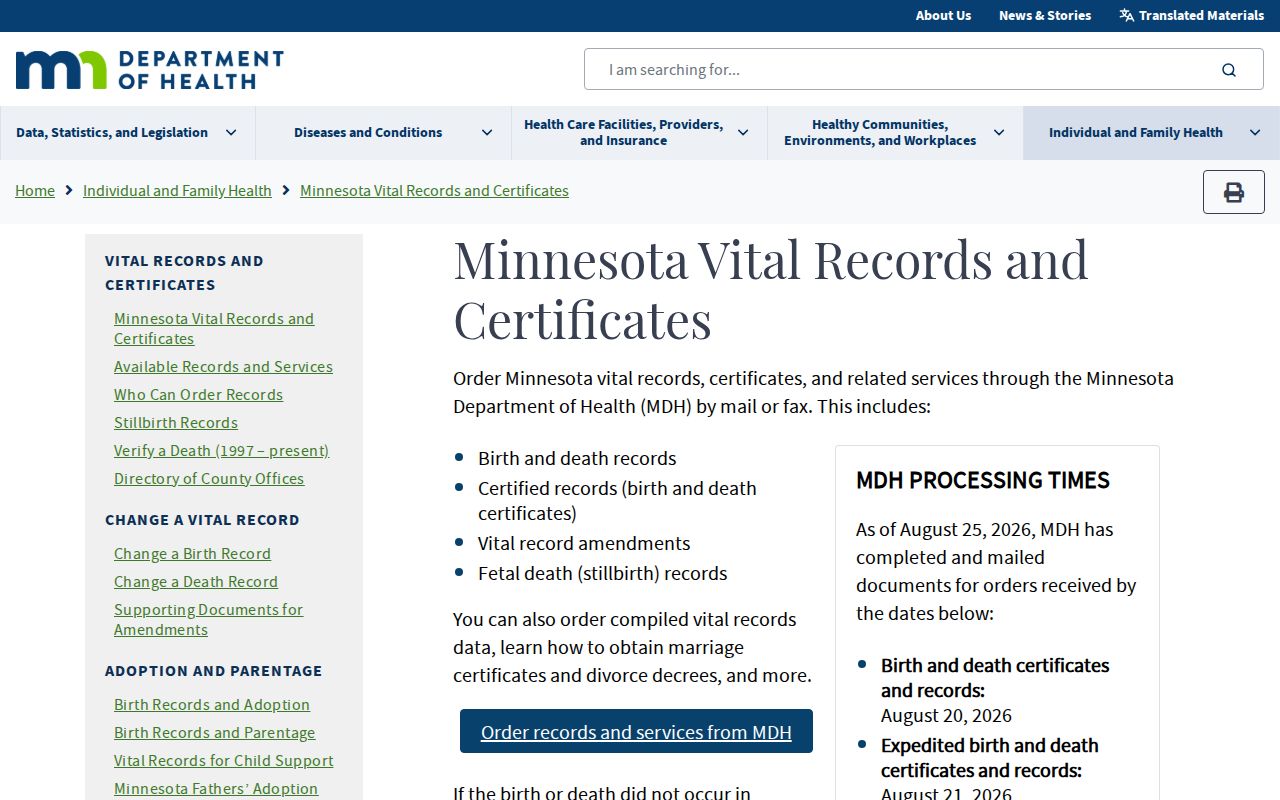
Indexes supply a name, date, county, or certificate number. They do not erase access rules or replace the underlying record.
Duluth Property Records Through ePlace
Duluth ePlace is the City’s public-facing route for permits, plans, inspections, licenses, requests, and invoices. It replaced eTRAKiT in 2024, and the 2026 budget records the 2025 transfer of business and animal licensing into ePlace. Search results and older property history can be limited by login or privacy classification. For a targeted address inquiry, the city’s Construction Services and Inspections office can help locate the proper channel; work older than 1992 may need a property-history request rather than an online search.
The Duluth ePlace public search capture shows the current interface. Use it to identify a property record, not to make an unsupported claim about a household.
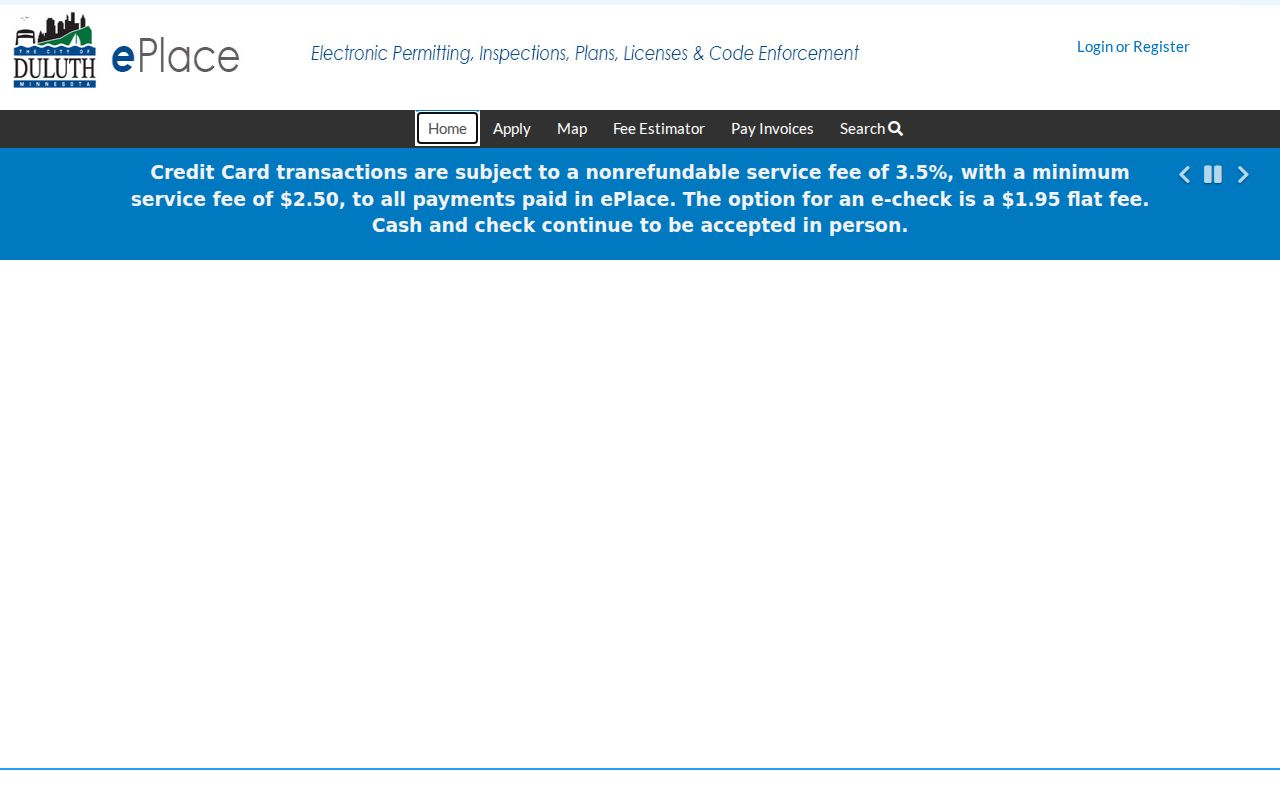
A permit may connect a date, address, contractor, or building change. It does not prove that a named applicant lives at the site now.
Historical Duluth Resident Directories
Duluth Public Library lists city directories from 1883 to the present, describes its 1884 to 1960 holdings as in-library material with searchable Ancestry access, and reports gaps for 1919, 1933, 1945, 1947, 1949, 1953, and 2008. The first street-by-street listing is 1930; earlier volumes are mainly alphabetical resident and business lists. UMD describes an overlapping 1882 to 2002 run, also with missing issues. Those catalog differences are part of the evidence, not a reason to invent a complete sequence.
A directory entry can contain a name, initials, occupation, street address, business address, or residence notation. It may describe a boarder, a business user, a widow, or an owner rather than every person in the household. Search nearby years, newspaper and obituary indexes, deeds, permits, and census material before drawing a conclusion. The full collection-by-collection treatment is on the Duluth city directory page.
Duluth Directory History in Small Formats
Duluth’s record history has a useful scale change. A local newspaper history describes the 1888 phone directory as a 3-by-6-inch card with 30 numbers. It was a telephone list, not a city directory, but it shows how thin local name lists once were. Modern records are spread across library databases, GIS layers, court indexes, ePlace, and recorder systems. More search boxes do not produce a single complete or error-free resident roll.
The first 1930 street-by-street directory is another pivot. It lets a historical address be read alongside neighboring entries, while earlier alphabetical books normally require a name first. That difference matters when tracing an old household or checking whether an address lead belongs to the right person.
Note: A historic directory is a dated snapshot, so compare adjacent years before treating one entry as a stable household record.
Duluth Maps, Newspapers, and House Photos
The library’s local-history links connect Minnesota Digital Library, newspaper repositories, the Library of Congress, archives, and neighborhood collections. For house research, compare an assessor record with directories, permits, newspaper references, and maps. Sanborn plates document building footprint, materials, use, and fire-risk context, but they do not identify occupants. UMD’s house-photo index covers more than 2,500 addresses and 7,514 prints or negatives for 2,880 houses, mostly east of Lake Avenue, with material reaching from the 1870s to the 1980s.
These sources are strongest when they answer a narrow historical question. A change in a 1937 to 1940 aerial image can suggest a follow-up in a permit or atlas; it cannot identify a person. The library, UMD Archives, and St. Louis County Historical Society offer in-person or appointment routes when a digitized collection does not include the item needed.
Duluth Public Records Request Channels
The St. Louis County public-records hub is the starting point when a document is not in an online search. Minnesota Government Data Practices Act requests work best when they describe the office, record category, date range, and desired fields. The county policy provides inspection, copies, or both; inspection is free, and copy charges may apply when the county’s cost exceeds $10. The agency should respond as soon as reasonably possible. Court copies follow court rules, and certificates follow the issuing office’s rules rather than a generic county request.
The county public-records capture shows the official entry point. It supports a narrow request process and does not promise a unified Duluth residents directory.
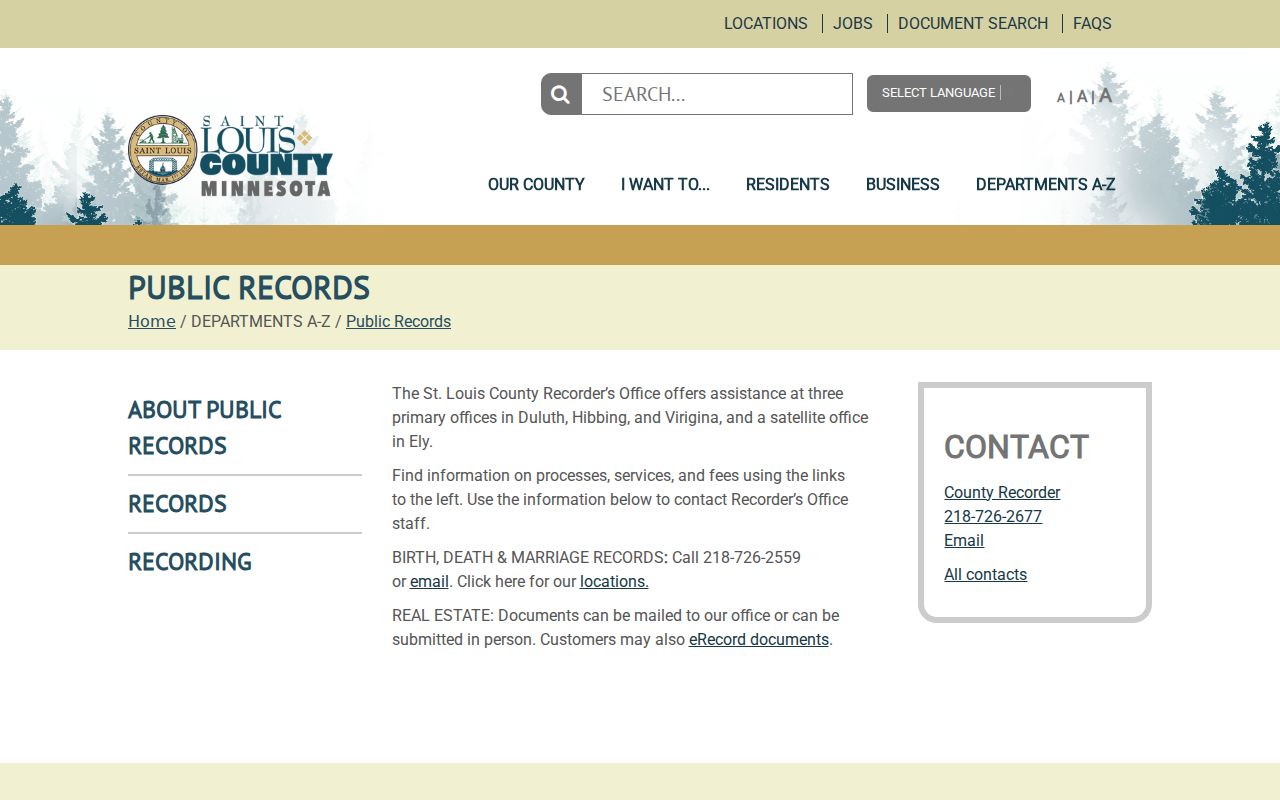
Requests can be handled online, in person, by phone for process questions, or through the named office’s email and mail routes. The Recorder accepts certain copy requests by email, fax, mail, or counter service; library and archive staff provide a separate research channel for historical materials.
The Minnesota data-access guidance illustrates the statewide framework behind a focused request. Ask for records the agency maintains, not an agency-created profile of a person.
Clear scope also reduces cost, delay, and the risk of receiving a record that cannot be released.
Duluth Resident Privacy Boundaries
Duluth records research has firm boundaries. Minnesota Safe at Home protects an enrolled person’s actual address through an assigned substitute address. Court data can be remote-restricted, and juvenile, victim, health, and other classified records may be unavailable. The state voter system distinguishes restricted master-list data from regulated public-list access. A property card can name a taxpayer or owner without confirming a resident. Respect the restriction rather than trying to combine sources to work around it.
Lawful personal research. Use Duluth record sources for a legitimate, lawful purpose and never to stalk, harass, intimidate, or harm another person. Minnesota’s stalking law, Minn. Stat. §609.749, makes repeated qualifying acts a criminal matter.
When evidence is needed for family history, an estate, or a similar matter, move from an index lead to the office that can provide the authoritative record. A directory, map, or tax card is often a useful lead but not the final proof.
Duluth Records Need Scam Checks
St. Louis County warned in August 2026 about AI-generated material promoting a false “Senior Homeowner Tax Review Request.” The county also reported fake invoices and wire-payment demands in 2025. Verify an unexpected deed, tax, or permit message through an official domain or a published county phone number. Do not use a link or payment instruction from an unsolicited message as the verification route. The county’s recorder material is the proper starting point for questions about a real recorded document.
The St. Louis County deed-fraud resource capture shows the official awareness route. A current public property-alert signup URL was not located, so confirm any claimed signup option directly with the Recorder.
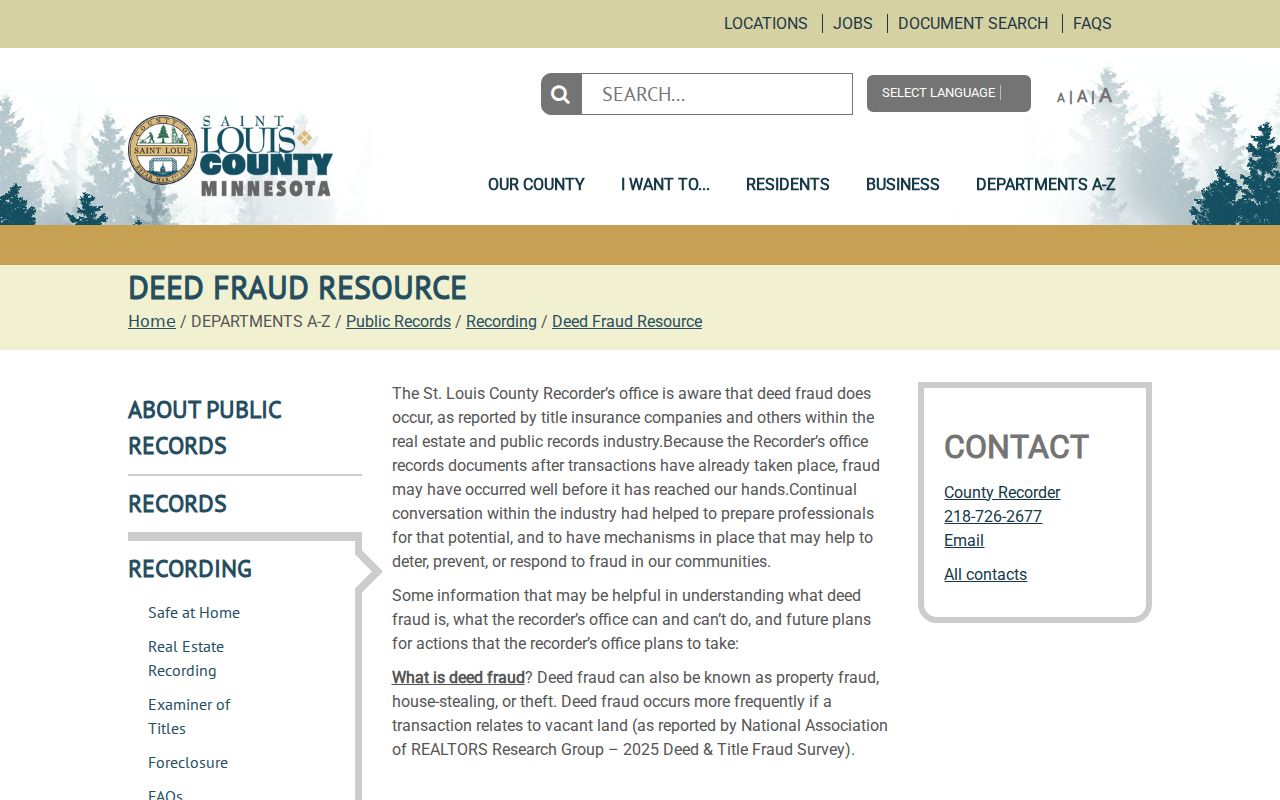
Check a document number, property description, and the office’s published contact information before relying on a notice. That small pause helps keep a legitimate residents-directory search from becoming a fraud target.