
Finding Duluth Residents Carefully
The Duluth residents directory is no master list. It is a set of narrow records. Start from the fact you hold. An address is strongest in the St. Louis County parcel and map tools covering Duluth. An older name often does better in a Duluth Public Library directory or obituary index. A legal or family event may surface through a Duluth court or Minnesota vital-record index. Treat a first Duluth result as a lead. A second source should confirm it or show why the match is shaky, since ownership, a taxpayer mailing address, and the person actually living there are separate facts.
Use each Duluth result only for the question it can answer. St. Louis County provides Duluth property and recorded-document paths. The Duluth library preserves historical directories and local indexes. Voter status is not a public name-to-address directory, and the state voter file has eligibility and purpose limits. Some Duluth records stay confidential, offline, or with another custodian. A no-result is a record of that Duluth search. It is not proof a person never lived here.
- Put a current Duluth address into the county parcel tools and record the physical address, PIN, tax district, and date checked.
- Compare the returned Duluth owner or taxpayer context with a deed instrument rather than treating either as proof of occupancy.
- For a past Duluth household, search the library directory run in nearby years and note any missing issue.
- Use a Duluth court, obituary, marriage, or vital index only as a locating lead, then request the record from its custodian when proof matters.
- When a Duluth online route ends, make a narrow Minnesota Government Data Practices Act request that names the office, period, record type, and fields needed.
Duluth Resident Records Offices
Several offices near the Duluth Courthouse keep records. Those records tie people to places in limited ways. The Recorder and Registrar of Titles handles recorded land documents. The St. Louis County Assessor's Duluth office keeps parcel and property detail. St. Louis County Elections serves Duluth registration and precinct needs under Minnesota rules. None keeps a living-household register. Bring the Duluth record type and a date range to the right office. That matters most for older documents or certified copies. For a longer address chain, follow the Duluth street directory research path.
St. Louis County Recorder / Registrar
100 N 5th Ave W #101
Duluth, MN 55802
218-726-2677
St. Louis County Assessor
Duluth Courthouse, Room 212
Duluth, MN 55802
218-726-2304
St. Louis County Elections
County elections office
Duluth, MN
218-726-2385
Duluth Address Records and Parcel Clues
St. Louis County Property Details Search is built around a Duluth parcel or physical address. It is not a broad person-name lookup. The system reports daily updates. A Duluth search can use the address, city, Parcel ID parts, plat, sale-date and price ranges, construction year, gross area, style, and units. The county offers a helpful Duluth tip. When a full address misses, try the number alone or a shortened, officially abbreviated street name. Confirm each Duluth return on the map.
| Property Details field | How it works in a Duluth search | Use with care |
|---|---|---|
| Duluth physical address | Enter a number or abbreviated street segment | It is not a resident-name field |
| Duluth Parcel ID | Use the CVT, Plat, and Parcel parts | Keep the full PIN with the source date |
| Duluth plat | Narrows a legal area | Compare it with the parcel record |
| Duluth sale and construction ranges | Filters property characteristics | They do not identify a current household |
Land Explorer adds Duluth parcel outlines, address points, roads, zoning, public-land layers, and historic imagery. Its help materials carry a warning. A Duluth physical address, an owner address, and a taxpayer address may all differ. One parcel can hold several physical addresses. Only an arbitrary primary address is searchable. That Duluth mismatch is a reason to collect every field instead of forcing a match.
- Duluth parcel or PIN
- A county identifier for a taxed piece of land, used to connect Duluth map, tax, and property-detail records.
- Duluth physical or situs address
- The location of the property, which may not be the taxpayer’s mailing address.
- Duluth recorded grantee
- A party named in a recorded instrument. That name documents the transaction, not necessarily a current occupant.
- Duluth index
- A finding tool that points to a record. It is not the same as a certified copy or an image.
Duluth Parcel Addresses Do Not Always Match
Every Duluth residents directory search needs an address identity card. Record the USPS-formatted mailing address, the county physical address, PIN, taxpayer mailing address, owner or grantee, ZIP code, neighborhood, precinct, and source. Add the date checked. The labels matter. They stop a Duluth searcher from mistaking a tax contact for a resident. They also stop anyone from reading a ZIP as a city boundary. Land Explorer can link a selected Duluth parcel to Tax Lookup and Property Details. That cross-link saves a step. The county calls its parcel information informal. It is not a title, survey, or appraisal.
For a Duluth address with strange results, use the map and road layers first. Compare the legal description or plat against the tax card. Only then move to a deed or permit. The sequence is slower than copying one field. It is far less likely to blend two buildings. It also avoids merging an owner's mailing address and a different household into one false Duluth record.
Note: Keep a dated record of search spellings, filters, and result counts. A later no-result can then be understood rather than guessed at.
Current Duluth Resident Rolls
The current Duluth residents directory offers useful pieces. Every piece is limited. Duluth property and tax records describe parcels, ownership, and taxpayer context. Recorded instruments show the parties to a land transaction. State voter tools address a voter's own status. An eligible voter may request a regulated public information list. Duluth city permit records can matter for a property, but they never substitute for a household list. The right Duluth source depends on the question: a parcel, a historic household, a civic record, or a named court matter.
| Duluth source | What the record can establish | Custodian | Access route |
|---|---|---|---|
| Property and tax cards | Parcel facts, taxpayer context, and property characteristics | County Assessor | Online tools, office, or data request |
| Recorded land instruments | Grantors, grantees, legal descriptions, and recording data | Recorder / Registrar | RecordEASE subscription, terminal, copies |
| Voter information | Individual status or an eligible requester’s permitted list | Secretary of State and county Elections | MNVotes or statutory request |
| City permits and property history | Work, licenses, plans, inspections, or property context | Duluth CSI and City Clerk | ePlace, City Hall, request |
| Library indexes and directories | Historical names, addresses, newspaper, and vital leads | Duluth Public Library | Library, local history, and databases |
A parcel card names an owner, not an occupant. A directory entry names a resident, not a titleholder. Duluth researchers get the most from these records by pairing them. Tie each source to a stable fact such as a date, address, PIN, legal description, or document number. The city publishes no unrestricted citywide resident directory. No public staff directory or ZIP-wide owner export exists either, and no municipal cemetery name search is offered.
Duluth Voter Data Has Narrow Rules
Minnesota keeps individual voter tools separate from the bulk voter-list process. The Minnesota voter lookup lets a person confirm registration and polling place details. It is not a public person-search directory. Under Minn. Stat. §201.091, the master list and the public information list carry different access limits. A registered Minnesota voter can request a list through the Secretary of State. A permitted purpose is required for that request. That request is not a license to build a broad household profile from civic data. The official voter-status screen displays the individual service route. It explains why no general name-and-address directory should be expected.
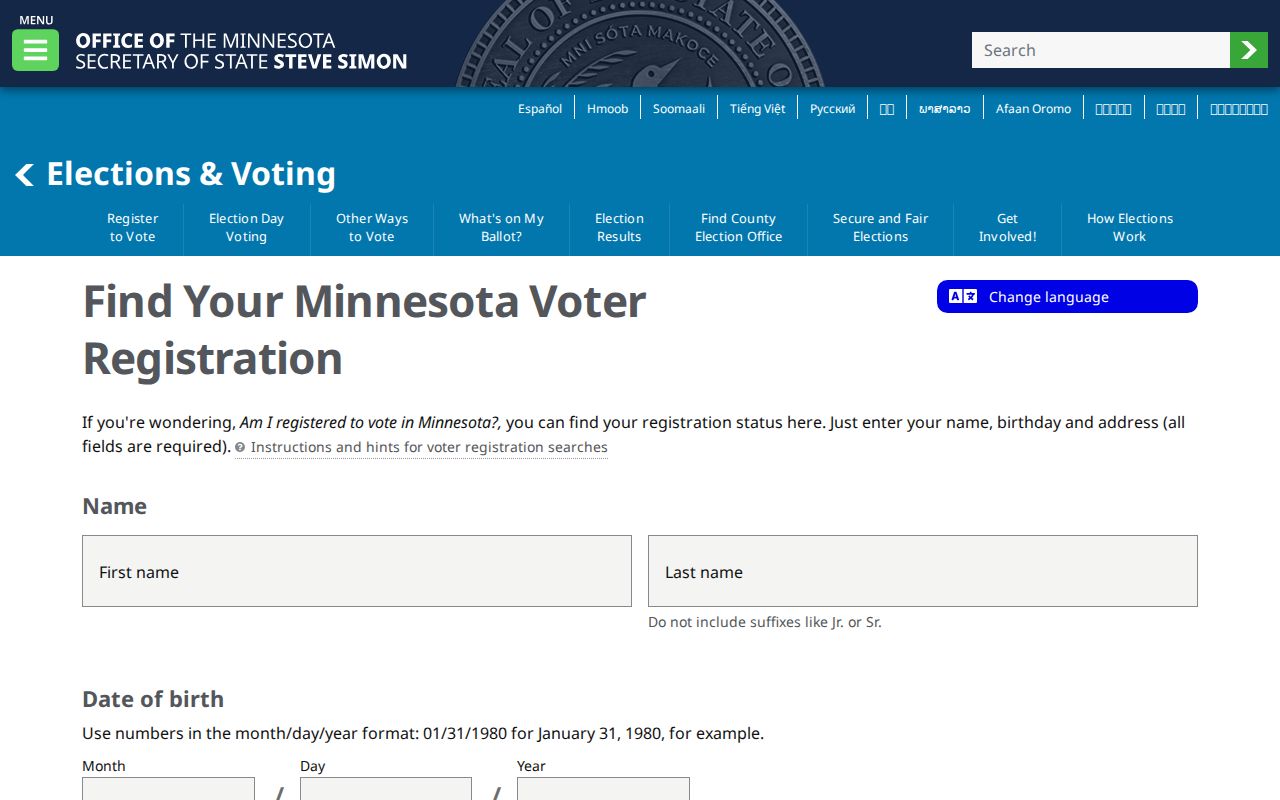
Use any voter information within the statute and the request terms. Safe Home participants rely on assigned substitute addresses. An address that looks public may still protect someone's actual location. The Minnesota voter-list request page lays out the separate eligibility-and-certification route.
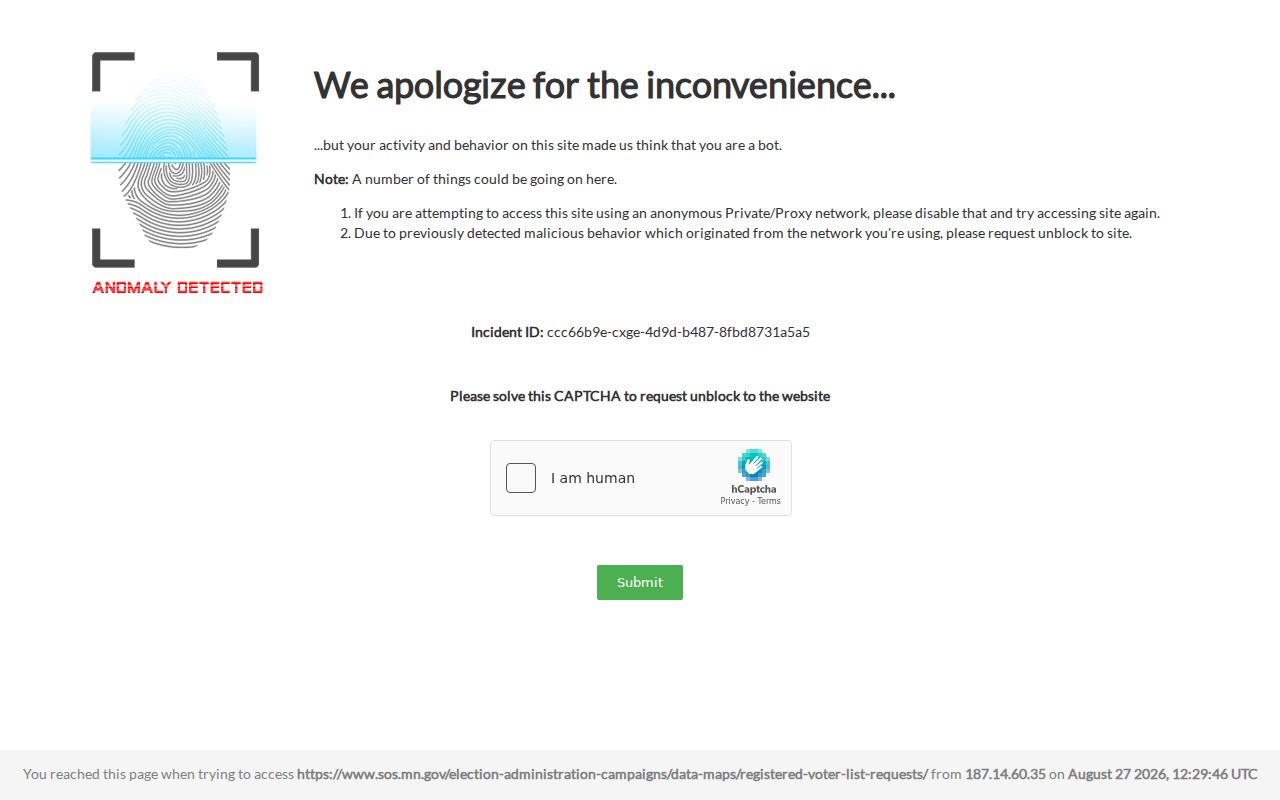
A request may include voter data only under the statute's permitted conditions. Treat it as a narrow tool, never an open Duluth resident directory.
Duluth Resident Court and Vital Leads
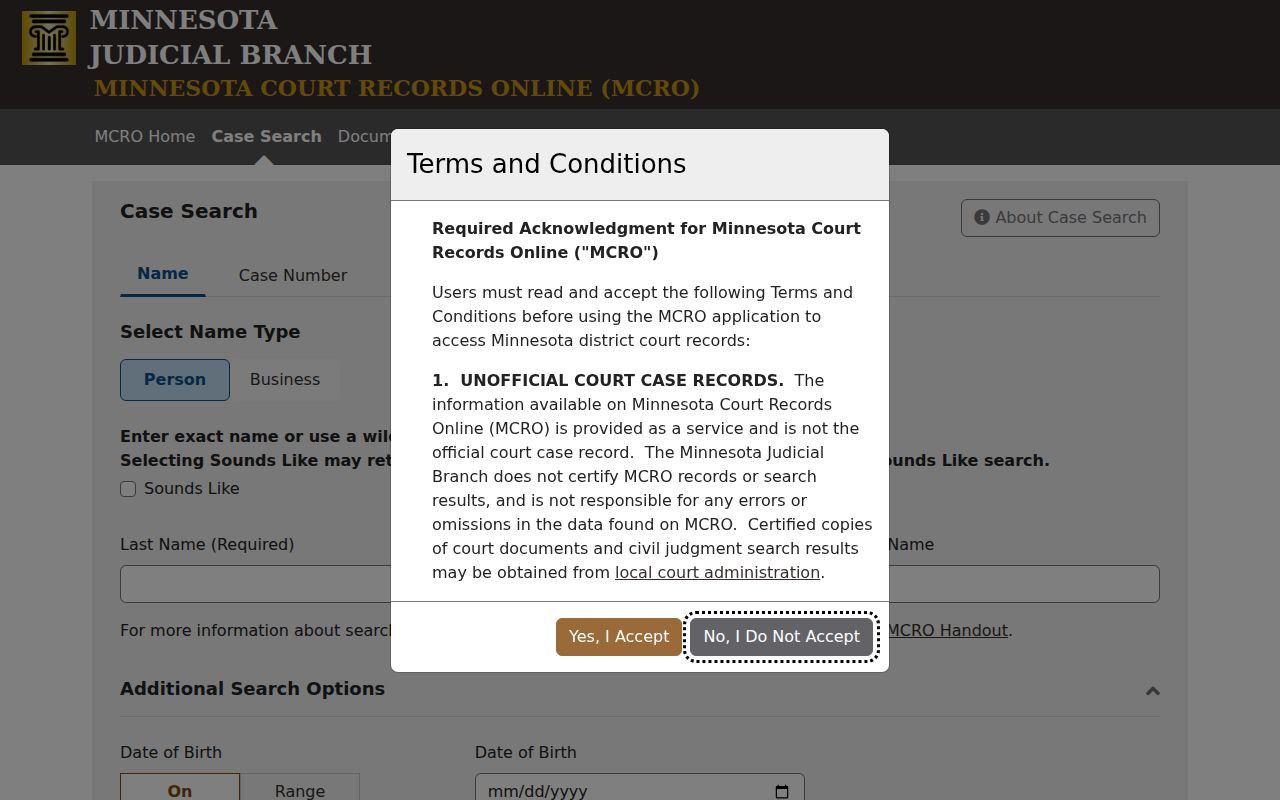
The statewide Minnesota Court Records Online service, known as MCRO, offers Name, Case Number, Citation Number, and Attorney searches. Name queries accept last, first, and middle names. A trailing wildcard works after two characters. A Sounds Like option is available too. Date-of-birth and filing-date filters help narrow a match. A shared name is not identity proof, though. Remote results omit some protected categories and party-address data. The Duluth courthouse provides public-access computers, and certified copies come through court administration. The MCRO interface is the official name-search starting point, so record a case number and compare case details rather than assuming a confirmed person.
The Minnesota Official Marriage System is an index, not a certificate. Death records follow their own public and certified-copy rules. Birth records carry tangible-interest and confidentiality limits. The Minnesota vital records service explains statewide ordering by mail or fax. County offices can often be the faster route for a permitted request. The vital-records access screen points to the official ordering rules. When an estate, family-history, or other formal matter needs proof, request the certificate or court copy from the custodian.
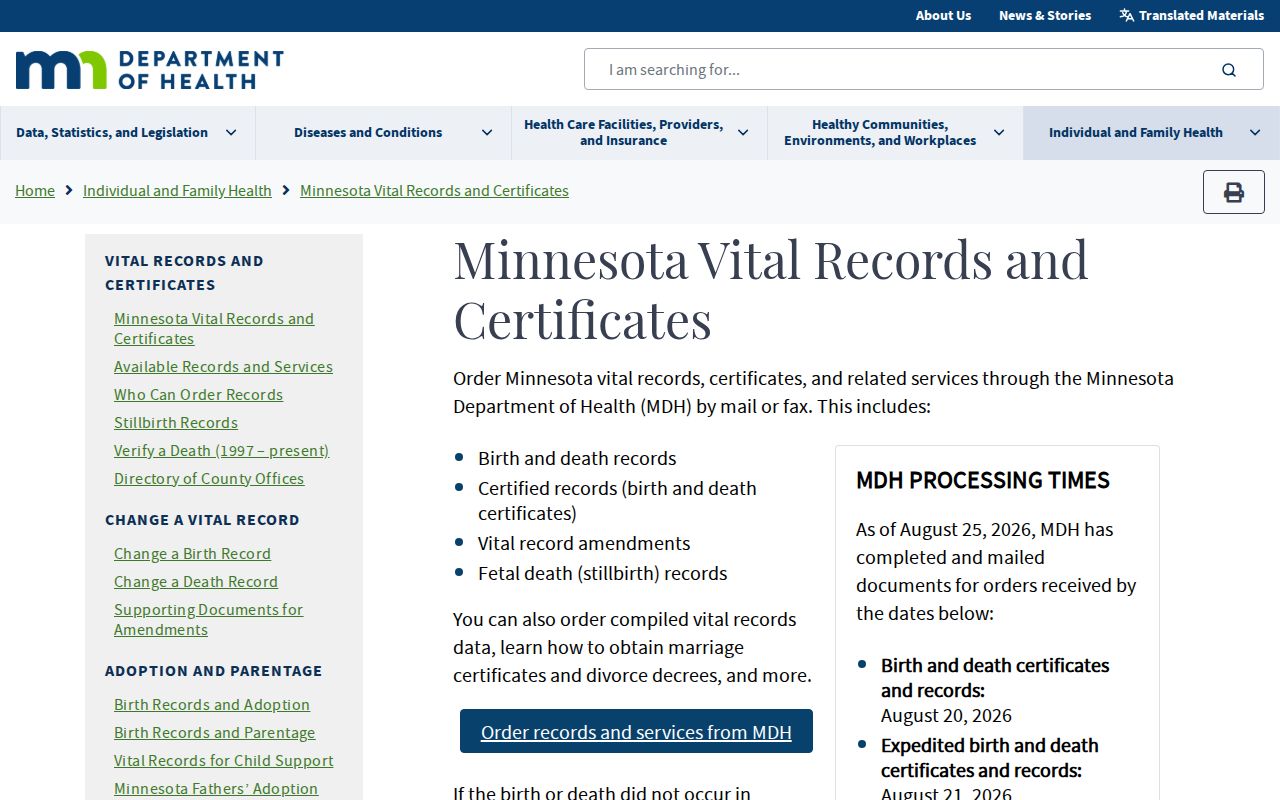
Indexes supply a name, date, county, or certificate number. They neither erase access rules nor replace the underlying record.
Duluth Property Records Through ePlace
Duluth ePlace is the City's public-facing route for permits, plans, inspections, licenses, requests, and invoices. It replaced eTRAKiT in 2024. The 2026 budget records the 2025 transfer of business and animal licensing into ePlace. Search results and older property history can be limited by login or privacy classification. Need a targeted address inquiry? Contact Construction Services and Inspections. That city office can help locate the proper channel. Work older than 1992 may need a property-history request instead of an online search. The Duluth ePlace public search page displays the current interface. Use it to identify a property record. Do not make an unsupported claim about a household.
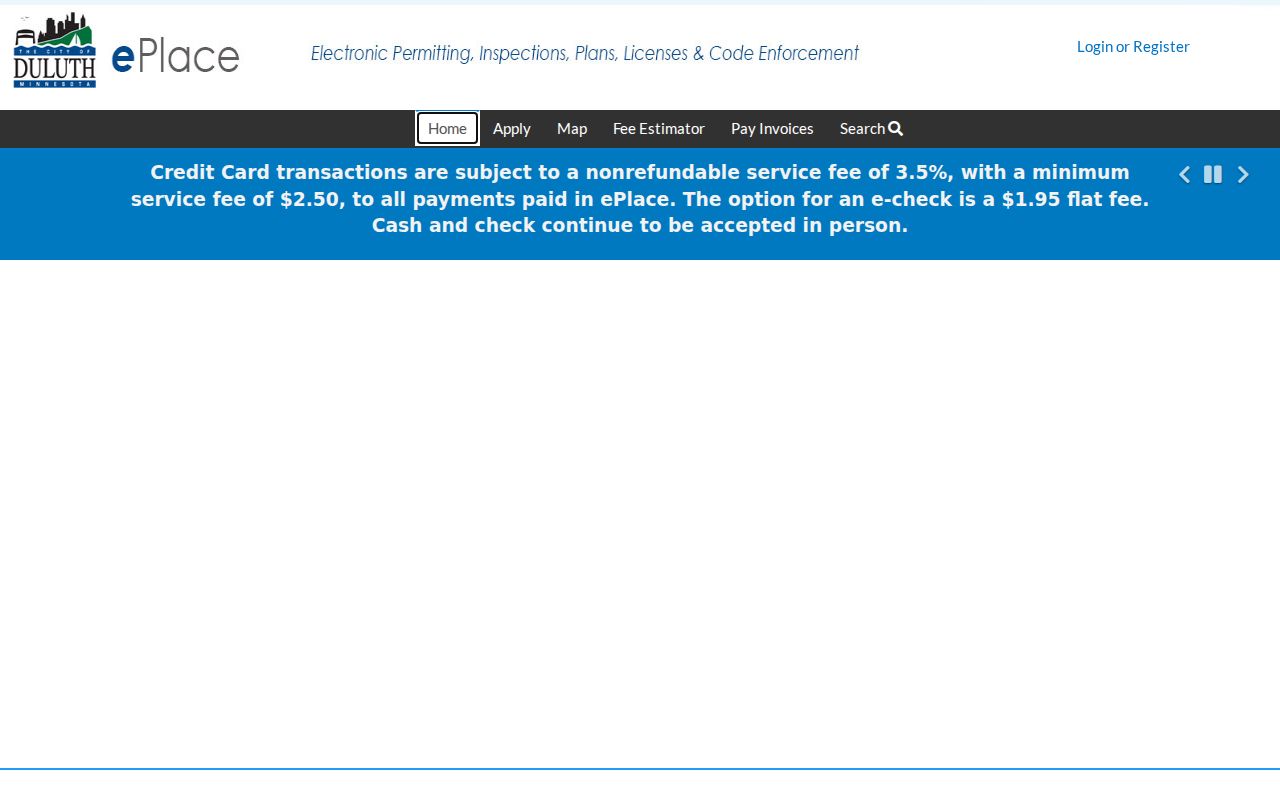
A permit ties together a date, an address, a contractor, and a description of the building change. That makes Duluth property records a useful cross-check for an address file.
A permit does not prove that a named applicant lives at the site now.
Historical Duluth Resident Directories
Duluth Public Library lists city directories from 1883 to the present. Its 1884 to 1960 holdings are in-library material with searchable Ancestry access. Gaps exist for 1919, 1933, 1945, 1947, 1949, 1953, and 2008. The first street-by-street listing appeared in 1930. Earlier volumes are mainly alphabetical resident and business lists. UMD describes an overlapping 1882 to 2002 run, also with missing issues. Those catalog differences are part of the evidence. There is no reason to invent a complete sequence.
A directory entry can contain a name, initials, occupation, and street address. It may also carry a business address or a residence notation. It may describe a boarder, a business user, a widow, or an owner. It does not list every person in the household. Search nearby years before drawing a conclusion. Newspaper and obituary indexes, deeds, permits, and census material add context. The collection-by-collection treatment sits on the Duluth city directory page.
Duluth Directory History in Small Formats
Duluth's record history changed scale more than once. A newspaper history recalls the 1888 phone directory, a 3-by-6-inch card holding just 30 numbers. It was a telephone list, not a city directory. Even so, name lists were thin then. Modern records sit in library databases, GIS layers, court indexes, ePlace, and recorder systems. More boxes do not yield one clean resident roll. The 1930 street-by-street directory was another pivot. Reading an address beside its neighboring entries became possible, while earlier alphabetical books demanded a name first. That shift matters for tracing an old household. It also tests whether an address lead belongs to the right person. Note: A historic directory is a dated snapshot, so compare adjacent years before treating one entry as a stable household record.
Duluth Maps, Newspapers, and House Photos
The library's local-history links open many doors at once. They connect the Minnesota Digital Library, newspaper repositories, the Library of Congress, archives, and neighborhood collections. House research works best when an assessor record is checked against directories, permits, newspaper mentions, and maps. Sanborn plates record footprint, materials, use, and fire risk. They do not name occupants. UMD's house-photo index is deeper than most, covering more than 2,500 addresses and 7,514 prints or negatives for 2,880 houses, mostly east of Lake Avenue, with material from the 1870s to the 1980s. Each source answers a narrow question best. A change in a 1937 to 1940 aerial image can point to a permit or atlas for follow-up. It cannot identify a person. No single image does that work. When a digitized collection lacks the item, the library, UMD Archives, and St. Louis County Historical Society offer in-person or appointment routes.
Duluth Public Records Request Channels
Some documents never surface in an online search. The St. Louis County public-records hub is the starting point for those. Data Practices Act requests work best with a clear shape. Name the office, the record category, the date range, and the fields you want. The county policy provides inspection, copies, or both. Inspection is free, and copy charges apply only when the county's cost exceeds $10. The agency should respond as soon as reasonably possible. Court copies follow court rules, certificates follow the issuing office's rules, and the hub itself supports a narrow request process. It promises no unified Duluth residents directory.
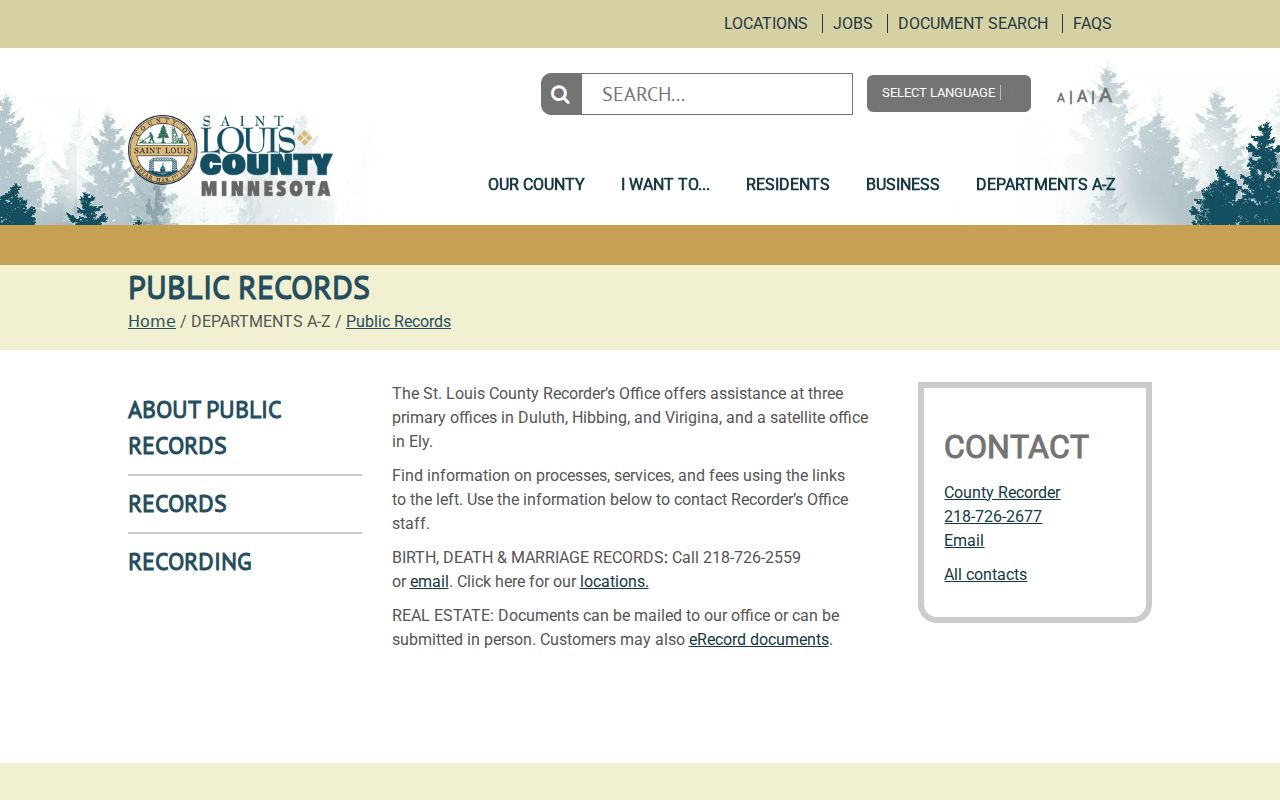
Requests move through several channels. Online filing, in-person visits, phone calls for process questions, and the named office's email and mail routes all work. The Recorder takes certain copy requests by email, fax, mail, or counter. Historical materials follow a different path. Library and archive staff handle that research channel. The Minnesota data-access guidance page shows the statewide framework, and its lesson is simple: ask for records the agency keeps, not a profile of a person.
Clear scope cuts cost, delay, and release problems. It also spares you records an office cannot lawfully provide.
Duluth Resident Privacy Boundaries
Duluth records research has firm boundaries. Minnesota Safe at Home shields an enrolled person's actual address behind an assigned substitute address. Court data can be remote-restricted. Juvenile, victim, health, and other classified records may be unavailable. The state voter system separates restricted master-list data from regulated public-list access. A property card can name an owner. It cannot confirm a resident. Respect each restriction rather than combining sources to work around it.
Lawful personal research. Use Duluth record sources for a legitimate, lawful purpose and never to stalk, harass, intimidate, or harm another person. Minnesota’s stalking law, Minn. Stat. §609.749, makes repeated qualifying acts a criminal matter.
Family history and estate work need real proof. Move from an index lead to the office that holds the authoritative record. A directory, map, or tax card is only a lead.
Duluth Records Need Scam Checks
St. Louis County warned in August 2026 about AI-generated material pushing a false "Senior Homeowner Tax Review Request." Fake invoices and wire-payment demands followed in 2025. An unexpected deed, tax, or permit message deserves suspicion. Verify it through an official domain instead. Never use a link or payment instruction from the unsolicited message itself. That is the fraudster's route, not yours. The Recorder answers questions about real recorded documents. The St. Louis County deed-fraud resource lays out the official awareness route. It publishes no public property-alert signup URL, so confirm any claimed signup option directly with the Recorder.
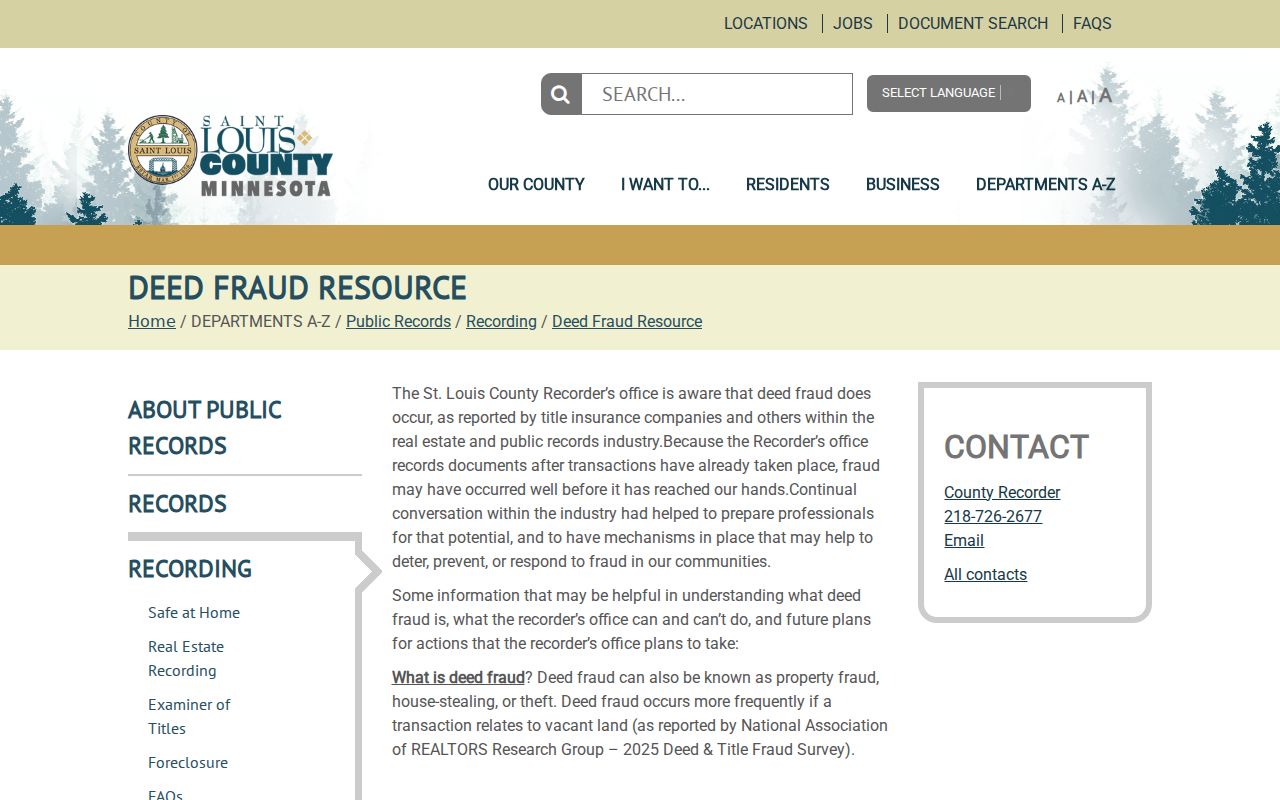
Check the document number, property description, and the office's published contact information before trusting a notice. That pause keeps a residents-directory search safe.