
Duluth Previous Residents by Era
Previous residents of a Duluth address can appear in several Duluth record systems, each with a different date span and purpose. Begin with today’s Duluth parcel and use it to control the older searches. A recorded grantee is a property party, a taxpayer is a billing contact, and a directory entry is an observation for one issue. That distinction is especially important in Duluth, where county GIS can display physical, taxpayer, and owner addresses that differ.
| Source | Years it covers | Where held | What it can show |
|---|---|---|---|
| RecordEASE abstract document images for Duluth | Back to October 16, 1961 online | St. Louis County Recorder in Duluth and paid RecordEASE access | Recorded instruments and document images |
| Duluth Abstract Filing Request | July 1, 1990 to current certification date | Duluth RecordEASE | Grantor, grantee, document, and cross-reference searches |
| Tract Index for Duluth | January 1, 1987 to current certification date | RecordEASE and St. Louis County Recorder research in Duluth | Legal-description and party trail |
| Duluth directories | 1883 to present catalog description | Duluth Public Library | Dated name, occupation, and address observations |
| CSI property history | Older-than-1992 searches need CSI discussion | City Hall and ePlace | Permit, blueprint, construction, and alteration leads |
For a recent Duluth instrument, begin online or at the St. Louis County Recorder in Duluth. For a pre-1961 abstract image or an older Duluth index, plan for deed books, office research, or a copy request. For occupants, move to Duluth library directories, newspapers, census material, and obituary indexes. This era table is a map for past residents, not a promise that every source names every person who lived at the address.
Duluth Previous Resident Labels
Keep Duluth address fields separate from the first search. The county's Land Explorer distinguishes a physical address, taxpayer address, and owner address. A Duluth parcel can have several physical addresses, while its primary searchable address is arbitrary. The mailing ZIP is a delivery label, the situs is where the parcel or building is located, and a directory address is a historic occupancy observation. A tax card is informal county information, not title, a survey, or an appraisal.
Duluth Public Library's house-history guide sets out the useful chain: assessor material, permits, directories, Sanborn maps, atlases, newspapers, and abstracts.
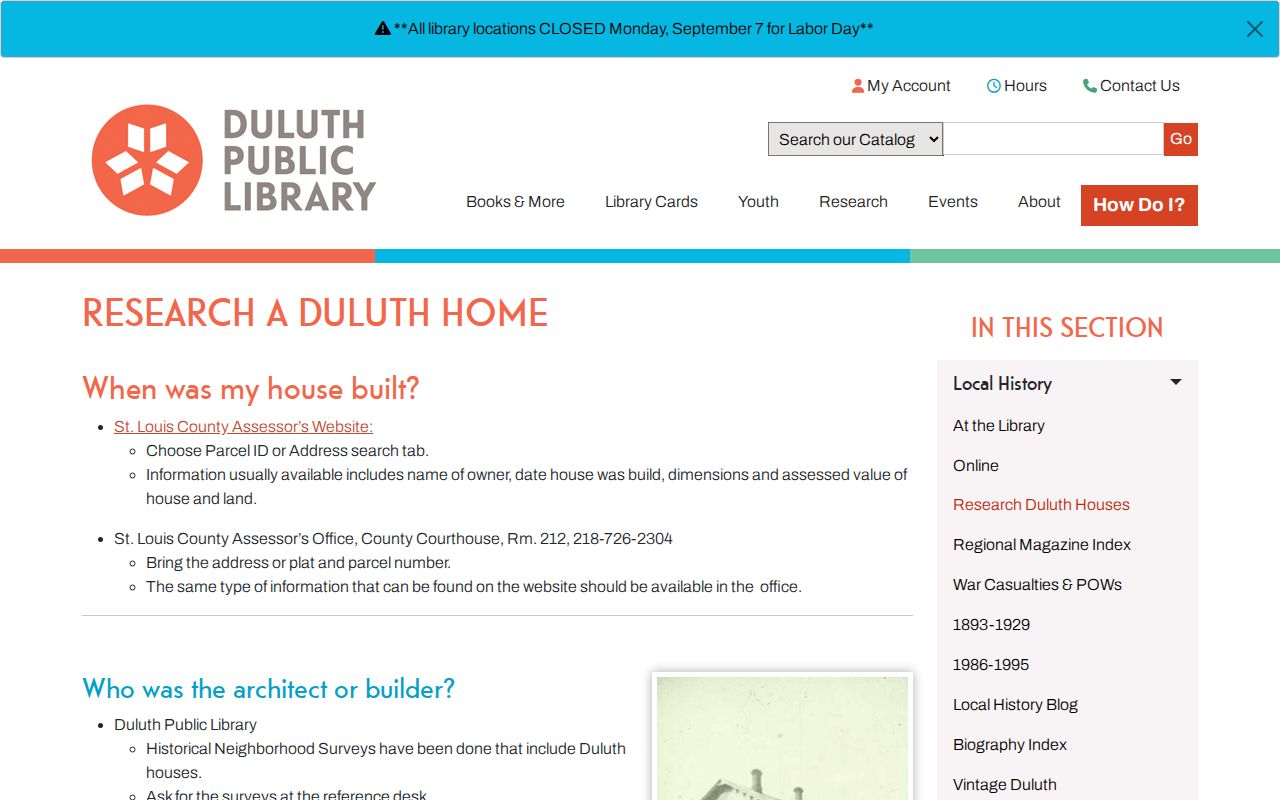
The house-history guide supports a layered Duluth search. It does not turn a Duluth taxpayer or grantee into proof that the same person occupied the address.
Duluth Previous Residents in Deed Records
The St. Louis County Recorder and Registrar of Titles handle both Abstract and Torrens land systems for Duluth. RecordEASE is paid online subscription access, not an anonymous Duluth resident finder. Abstract Filing Request searches grantor, grantee, cross-reference, AFR number, and document number. The Tract Index adds instrument codes and legal-description fields. Torrens filing searches have separate certificate mechanics, including live, cancelled, or all certificate filters. Try names without punctuation and generally last name first, then test spelling and date variants.
St. Louis County Real Estate Recording also provides public terminals in the Recorder’s office. The Recorder is at Duluth Courthouse, 100 N 5th Ave W #101, 218-726-2677, Monday through Friday 8 to 4:30. Plain and certified copies have distinct stated fees; a request should identify Abstract or Torrens, the document number if known, and requester contact information. Plain copies can be emailed, while certified copies can be mailed or picked up. The office also accepts mail at PO Box 157, fax at 218-725-5052, and email at slcrecorder@stlouiscountymn.gov.
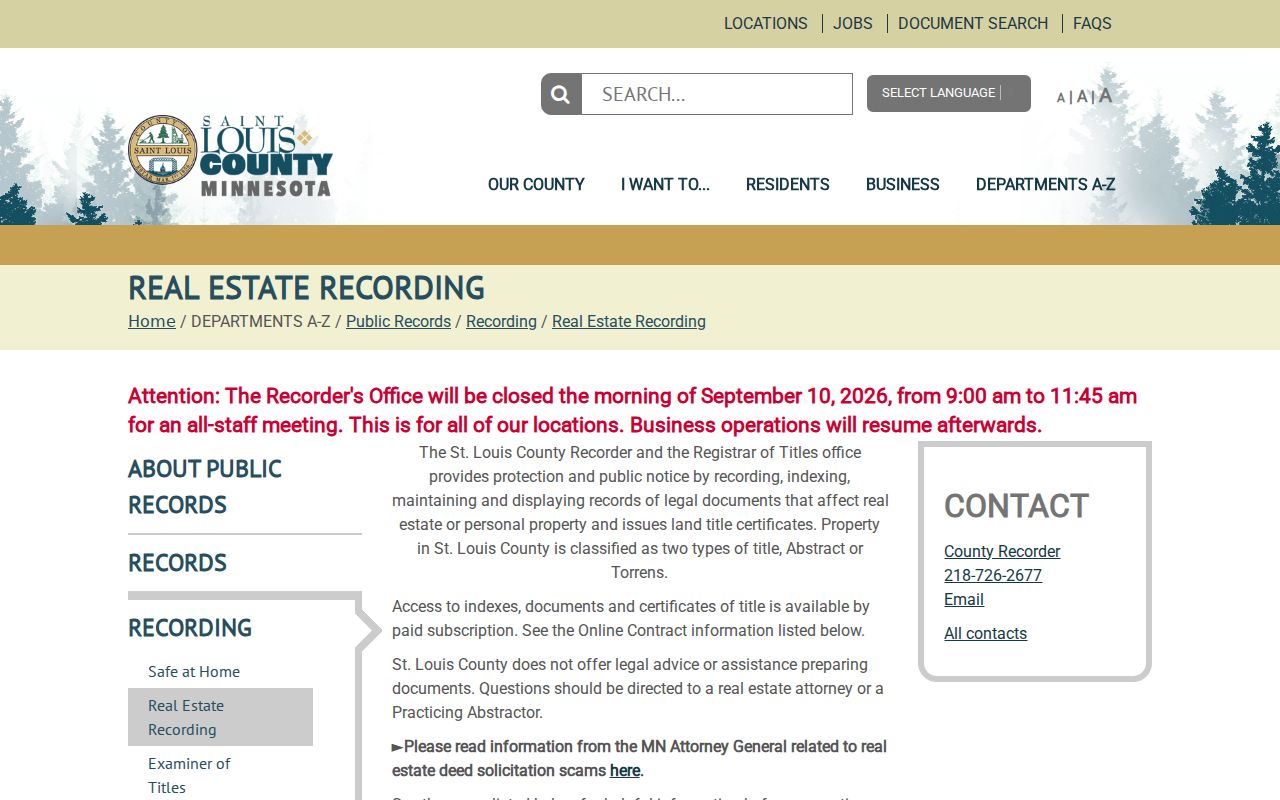
The Recorder page is the current Duluth route for office terminals, recorded-copy requests, and land-record guidance. Older Duluth deeds may require office or book-page research even when later images appear online.
Duluth Previous Residents Deed Chain
A chain of title follows Duluth property instruments backward. Start with the current Duluth parcel, not a guessed name. Land Explorer can identify a PIN and linked parcel tools; Property Details and tax lookup add characteristics and taxpayer context. Use the legal description, document number, date, and cross-reference to resolve common names. The legal description often survives Duluth address changes better than a street label.
- Find the current Duluth parcel, PIN, physical address, and legal description in county parcel tools.
- Locate the current grantee’s purchase instrument in the appropriate Recorder index.
- Record the grantor, grantee, instrument number, recording date, Abstract or Torrens status, and linked prior document.
- Search the former owner as a grantee to find the earlier purchase, using spelling, initials, trusts, and date variants.
- When the chain crosses the online image cutoff, continue through Recorder office research, deed books, or requested copies.
- Grantor
- The party transferring an interest in an instrument.
- Grantee
- The party receiving that interest in an instrument.
- Chain of title
- The dated sequence of recorded transfers or related title instruments.
- Legal description
- The plat, lot, block, or metes-and-bounds description that identifies land beyond a street address.
Duluth Previous Residents in Directories
Deeds provide the ownership side of the trail. Directories, census material, newspapers, and obituaries provide household context. Duluth Public Library describes directories from 1883 to present, with 1884 through 1960 holdings and named gaps. The first street-by-street directory appeared in 1930; earlier volumes are mainly alphabetical. Start with a name entry, carry the printed address into the later street section when available, and compare nearby issues rather than claiming continuity from one page alone.
Pair a directory issue with an available census record and preserve the date of each. Minnesota People Search includes census material from 1849 through 1905, alongside historical vital and veteran collections. The Duluth city directory page details the library and archive collections themselves; this address trail uses those sources to distinguish an owner from a dated occupant.
Note: A name in a directory can be a boarder, business contact, widow, or owner, so it does not establish every member of a household.
Duluth Previous Residents and Maps
Historic maps can explain the building and lot behind a past-resident search. Duluth’s library guide points to Sanborn maps on microfilm from 1884 to 1949, print sets for 1909 through the 1950s and 1954 or 1955, Rascher maps from 1892, and several local atlases. The Library of Congress digitizes Duluth Sanborn material, including an 1884 set with 18 sheets and a 1908 volume with 115 sheets. Compare the sheet number, address, lot, and building footprint across editions.
Fire-insurance maps document Duluth construction, materials, use, and fire-risk context. They do not identify occupants. A public Duluth street-renumbering history was not located, so an apparent address change should be treated as a research gap until assessor, Recorder, directory, atlas, permit, and librarian or Engineering evidence supports the connection.
Duluth Past Residents Through CSI
City permit and property-history records can add the construction and alteration layer. Duluth CSI says Building Safety material or blueprints may include a first owner, architect, builder, materials, additions, and permit dates. The current public route is ePlace, which replaced eTRAKiT after its May 2024 launch. More information can require a contractor or public ePlace account, and older records than 1992 should be requested through CSI.
City Hall Room 100, 218-730-5240, and permittingservices@duluthmn.gov are documented CSI contacts. The property-history request asks for property or parcel information and requester contact details. Plans and blueprints may have safety or privacy restrictions. A Chapter 13 request can seek public agency records, but keep it narrow by record type, date range, office, and fields.
UMD's Duluth house-history research guide provides another local route for directories, map context, and collection referrals.
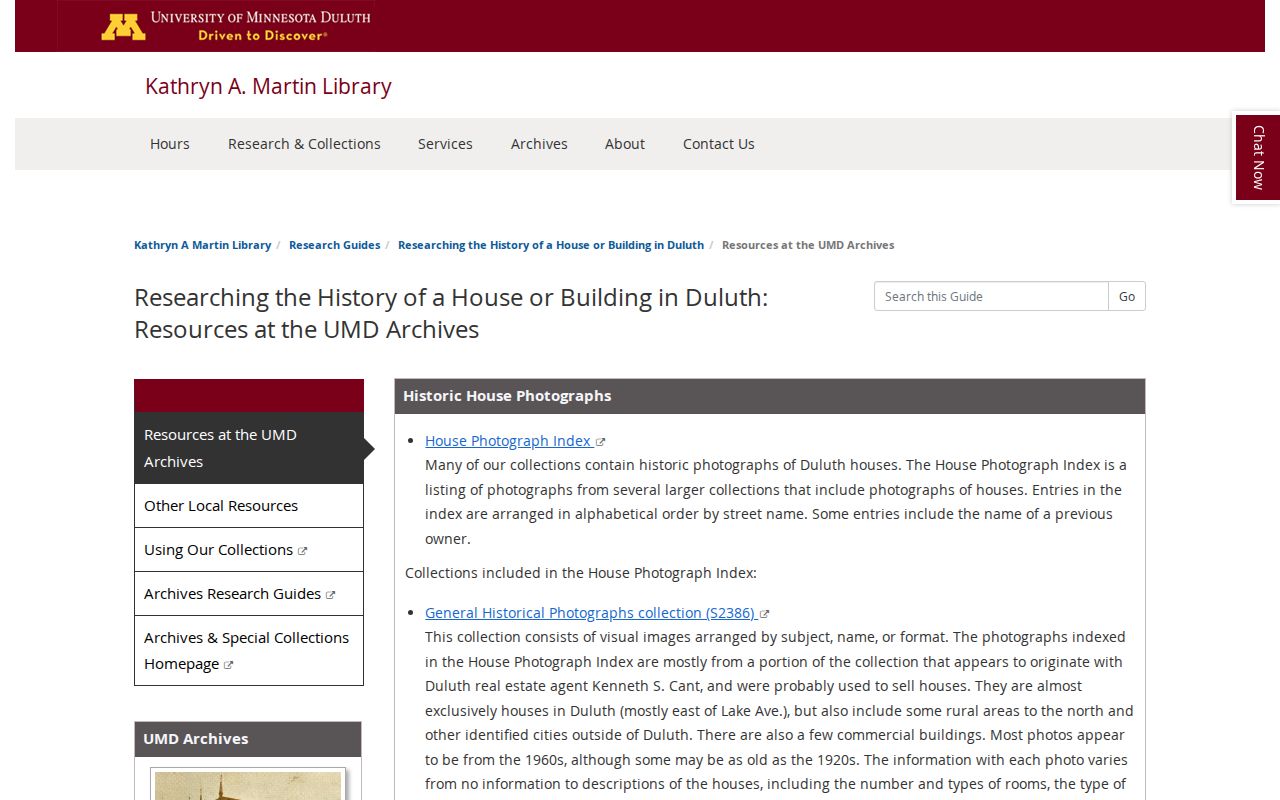
The UMD guide describes a Duluth directory run from 1882 through 2002, with some missing. That catalog difference is a reason to verify availability with the institution, not a reason to invent a complete run.
Duluth Previous Residents Evidence Trail
Build a simple evidence table as the Duluth address trail grows. The goal is to show what one Duluth source actually says and what it cannot show. A recorded Duluth deed can establish an instrument party and recording date. A tax card can show taxpayer context. A directory can place a printed name at an address for one issue. A map can show a Duluth building footprint. Keeping those propositions separate is the best defense against a mistaken identity.
| Source and date | Name the portal, office, volume, issue, map sheet, or archive item and its date. |
|---|---|
| Address field | Mark whether it is physical, taxpayer, owner, mailing, or historic directory address. |
| Identity field | Preserve spelling, initials, occupation, party role, and any document number. |
| What it proves | State the narrow fact, such as a recorded transfer or a dated printed entry. |
| Next check | Note the deed, directory issue, obituary, permit, map, or certificate needed to test it. |
Duluth Previous Residents Limits
Research past residents for family history, estate questions, house history, or personal curiosity. Do not use a dated address trail to track or harass a living person. Minnesota Safe at Home participants use protected substitute addresses, and their actual location must not be inferred. Chapter 13 can provide public government data while other classifications protect fields, so ask the custodian for the public portion and the withholding basis.
The county’s 2026 warning about AI-generated “Senior Homeowner Tax Review Request” material is another reason to verify property-related claims with the official office at 218-726-2304. No single unrestricted Duluth resident directory or ZIP-wide owner export was located. The careful path is narrower: parcel, document, directory, map, and custodian records, each cited for the fact it supplies.