
Duluth Resident Lookup Records to Compare
No agency maintains an unrestricted, current name-to-profile directory for Duluth. A careful Duluth resident lookup instead uses narrower public sources. St. Louis County parcel tools for Duluth can connect an address to a parcel and tax context. Minnesota Court Records Online, called MCRO, can locate a public case by name. Duluth library indexes and MOMS can offer a historical death, birth, obituary, or marriage lead. Each source answers a different question, and none establishes every fact about a Duluth person.
| Record path | What it can confirm | Duluth or Minnesota source | Access route |
|---|---|---|---|
| Duluth parcel and tax context | PIN, physical address, taxpayer or owner context, and Duluth property facts | St. Louis County Property Details and Land Explorer for Duluth | Online, St. Louis County office serving Duluth, or a narrow data request |
| Duluth district court case | Case number, category, filing date, status, and public events | Minnesota Court Records Online | Remote search, Duluth courthouse terminal, or court administration |
| Duluth vital-record lead | Death, birth, or marriage index details that point to a custodian | Duluth Public Library, MOMS, MDH, or County Recorder | Index, Duluth library, mail/fax form, or county counter |
| Duluth election information | Personal registration status, or a restricted voter-list report for an eligible requester | Minnesota Voter Status Lookup | Duluth user-specific lookup or certified request process |
| Duluth credential or filing | A license, filing, or recorded business relationship | Minnesota boards and Secretary of State systems | Portal, Duluth office, or order channel |
Begin with the smallest dependable Duluth anchor. For a current Duluth address, preserve the physical address, taxpayer address, owner field, parcel ID, and map date as separate notes. For a historic Duluth name, begin near the known event year in the Duluth directories or obituary indexes. For a Duluth legal event, use the name, date range, and court category together. A positive Duluth match is a lead until another record supports it.
Use MCRO for a Duluth Name Search
MCRO offers Name, Case Number, Citation Number, and Attorney tabs for a Duluth case check. Its Name search accepts last, first, and middle names. It can use an exact name, a trailing wildcard after two characters, or Sounds Like, but Sounds Like cannot be combined with a wildcard. Optional date-of-birth and filing-date filters, case categories, and status help separate a Duluth result from one belonging to someone else in Minnesota.
A Duluth result may show the case number, category, filing date, party role, status, hearings, register-of-actions events, disposition or judgment data, and public document links. These fields vary by case and access class. Remote results also exclude some protection, juvenile, commitment, party-address, and pending defendant-name information. A Duluth name hit is not identity proof, and no hit is not a certificate that no record exists.
| MCRO result field | What it supplies for a Duluth comparison |
|---|---|
| Case number and category | A stable case reference and the record type, such as civil, criminal, family, probate, or mental health. |
| Filing date and status | A time check that can separate similar names and distinguish a filed matter from a final outcome. |
| Party role and register of actions | Public case context and dated events that should be read with the case number, not as a personal profile. |
| Public document links | Available documents only, subject to the case's remote-access classification. |
The Minnesota BCA Criminal History Search is a different statewide public-record path, limited by its own coverage rules. The assigned screen below shows that official starting point for a Duluth name. It is not a substitute for checking the proper court, record date, and identity details.
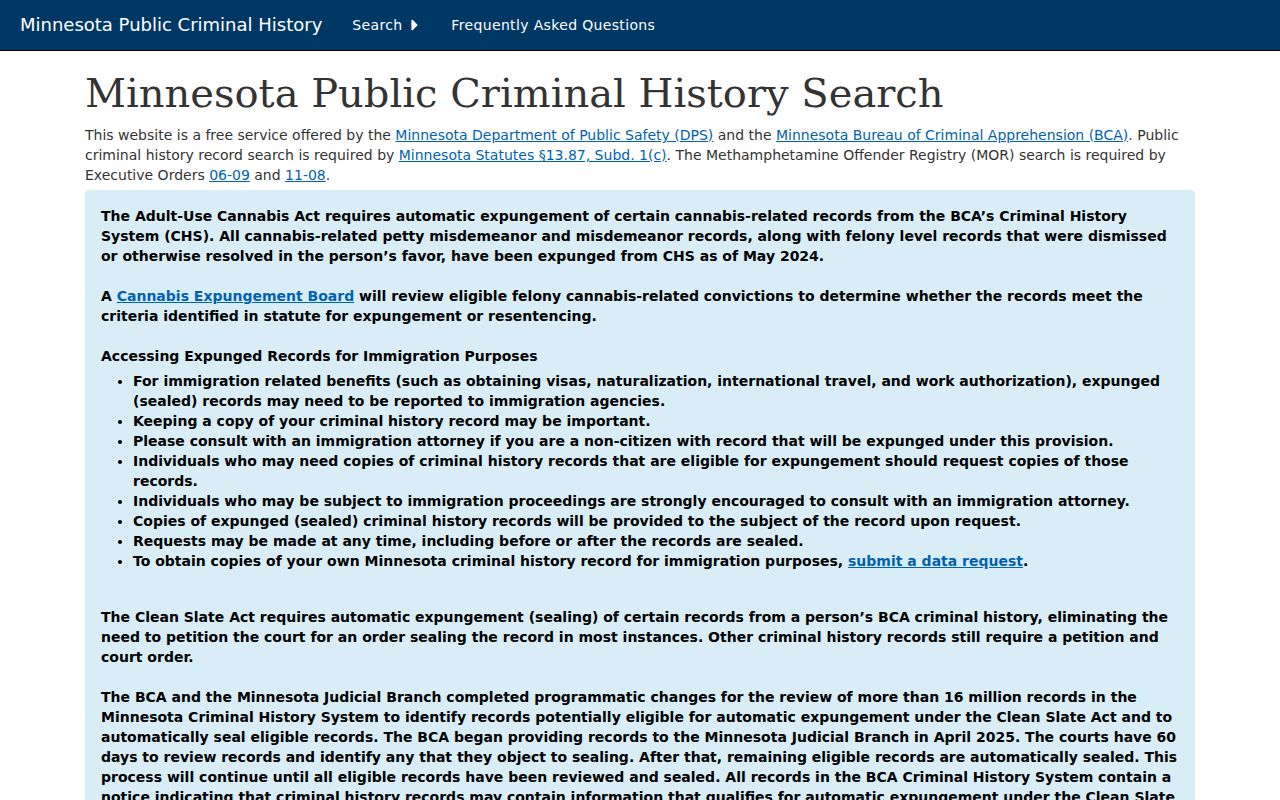
The BCA search concerns public Minnesota conviction history within its stated boundary, rather than every arrest, juvenile matter, federal case, or older private record. Keep it separate from a Duluth MCRO case result.
For a fuller Duluth public-access check, use the Duluth District Court customer-service office and public computer at the courthouse. Duluth court administration handles certified copies. Uncertified MCRO downloads have no fee since July 1, 2023; the research records certified copies at $14, subject to current court rules.
Duluth Resident Lookup Vital Index Leads
Duluth vital records can verify chronology, but the index and the certificate are not the same thing. Duluth Public Library links its obituary index, St. Louis County Death Index, Birth Index, Minnesota People Search, and Minnesota Official Marriage System. The death index covers 1870 to 2000 and the birth index covers 1859 to 1900. The Duluth Area Obituary Index reaches Duluth News Tribune notices from 1944 forward. These Duluth sources are strong locating leads for relatives, estates, and family history.
For Duluth proof, use the underlying custodian. Minnesota deaths begin statewide in 1908, and pre-1908 deaths generally go to the county of death. MDH lists certified and noncertified death records at $13 on the researched page. Duluth birth records have tangible-interest and confidentiality rules. A confidential birth record may become public after 100 years under Minn. Stat. §144.225, subd. 2(b), but that threshold is not a broad rule for every vital record.
MOMS searches participating counties, including St. Louis, by applicant names, date range, and starts-with, sounds-like, or exact matching. It returns a Duluth index lead, not a certificate. The St. Louis County marriage form can be sent to the Recorder by mail or to birthdeathmarriage@stlouiscountymn.gov; the researched form lists $9 per certified or noncertified copy and a one-to-two-week allowance. Duluth divorce decrees instead belong with District Court.
Note: A library obituary or death-index result can locate the right record, but the issuing office supplies the document needed for formal proof.
Duluth Obituary Indexes as Family Leads
Duluth Public Library's online genealogy collection makes the local obituary and vital indexes particularly useful when a Duluth name has only a rough date or family connection. The Duluth Area Obituary Index covers Duluth News Tribune notices from 1944 forward. The St. Louis County Death Index can supply a name, death date, certificate number, and location or comments, while the county Birth Index supplies published name and date details. Minnesota People Search can add state historical collections for Duluth research, with their own coverage rules.
These Duluth tools help locate a document or distinguish two people with the same name. They do not replace the certificate, and a notice can contain information that needs confirmation. Keep the Duluth index title, search date, result fields, and any next custodian together. For a certified or legally sufficient record, return to MDH, the County Recorder, or the court that holds the underlying Duluth file.
Reconcile Duluth Names Across Records
Common names are the main trap in any Duluth name search. Search exact spellings, middle initials, former or married names, occupation or business context, and sound-alike forms only as leads. Then compare timing in Duluth records as carefully as name. A deed can be recorded after it was signed, a case docket can change after filing, and an obituary appears after a death. A Duluth record's event date, filing or recording date, and publication date should not be treated as the same date.
- Docket
- A docket, often called a register of actions, is the Duluth court's dated list of events in a case. It is not a biography of a party.
- Index and image
- An index points to a Duluth record with fields such as a name, date, or number. An image is a scan of the underlying document and may have different access rules or a copy charge.
- Certified copy
- A certified copy is an official copy issued by the custodian with its certification. A search result or ordinary download is not the same thing.
Duluth entities need their own check. A trust, estate, corporation, public body, or trade name in a parcel or filing record may not be a personal residence. The Minnesota business and UCC portal can show a Duluth filing relationship, while a business result alone does not establish that an individual lives or works at a Duluth address.
Verify a Duluth Resident Before Ordering
Use a deliberate sequence when a name needs to be anchored to a Duluth address or event. The goal is confirmation across independent Duluth sources, not a larger pile of loosely related search hits. County parcel material is often useful for a Duluth address starting point, while court and vital indexes supply dated context. When a record is restricted, the proper response is to use the custodian's copy or request procedure.
- Search County Land Explorer or Property Details with the address. Record the returned parcel ID and distinguish physical, owner, and taxpayer addresses.
- Run MCRO using the name plus an available filing-date range or category. Open a case-number result only to inspect the public fields relevant to the match.
- Check a library index, MOMS, or an obituary lead for a date, relative, certificate number, or county that independently fits the person.
- Ask the court, MDH, County Recorder, or other actual custodian for the authorized copy when a certified record is needed.
This process keeps a parcel owner, taxpayer, directory entry, and court party from being silently collapsed into one identity. For address-centered research about an entire road, the Duluth Street Directory uses a different, street-by-street method.
Duluth Civic Records and Addresses
Minnesota Voter Status Lookup is an individual registration and polling-place workflow, not a public name-to-address directory. Under Minn. Stat. §201.091, the public information list is available only to a registered Minnesota voter for permitted purposes. A request can include items such as name, address, phone, birth year, registration date, district, and voting history, but it requires the requester's certification, payment, and proper purpose. The master list has tighter limits.
For an address, the county tools also distinguish data types. Land Explorer can link a map result to property and tax tools, but physical, taxpayer, and owner addresses may differ. The public Property Details search is oriented to address and property characteristics; the researched page did not expose an owner-name search field. Use a parcel result as property context, not a claim that a named person occupies the location.
Safe at Home participants may use public-looking substitute addresses while their actual location remains protected. Never use voter, parcel, or postal information to try to identify that location.
Duluth Status Records by Name
Some official systems answer a narrowly defined status question. The Minnesota DOC public viewer searches by first name, last name, or an exact six-digit ID and is limited to DOC jurisdiction. Name entries are prefix-oriented and can include name history or aliases. New entries may take several business days. The linked screen below illustrates that limited path, and a no-result is not proof that no record exists outside this system.
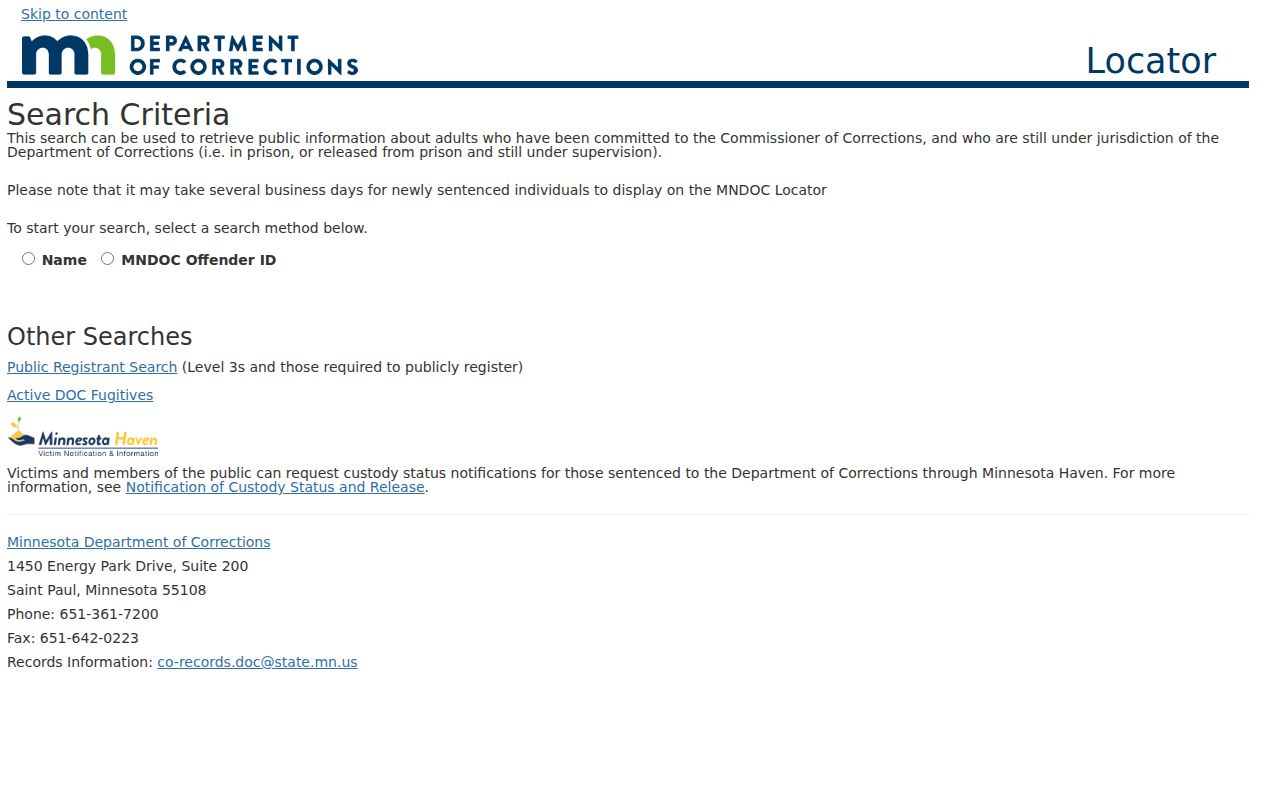
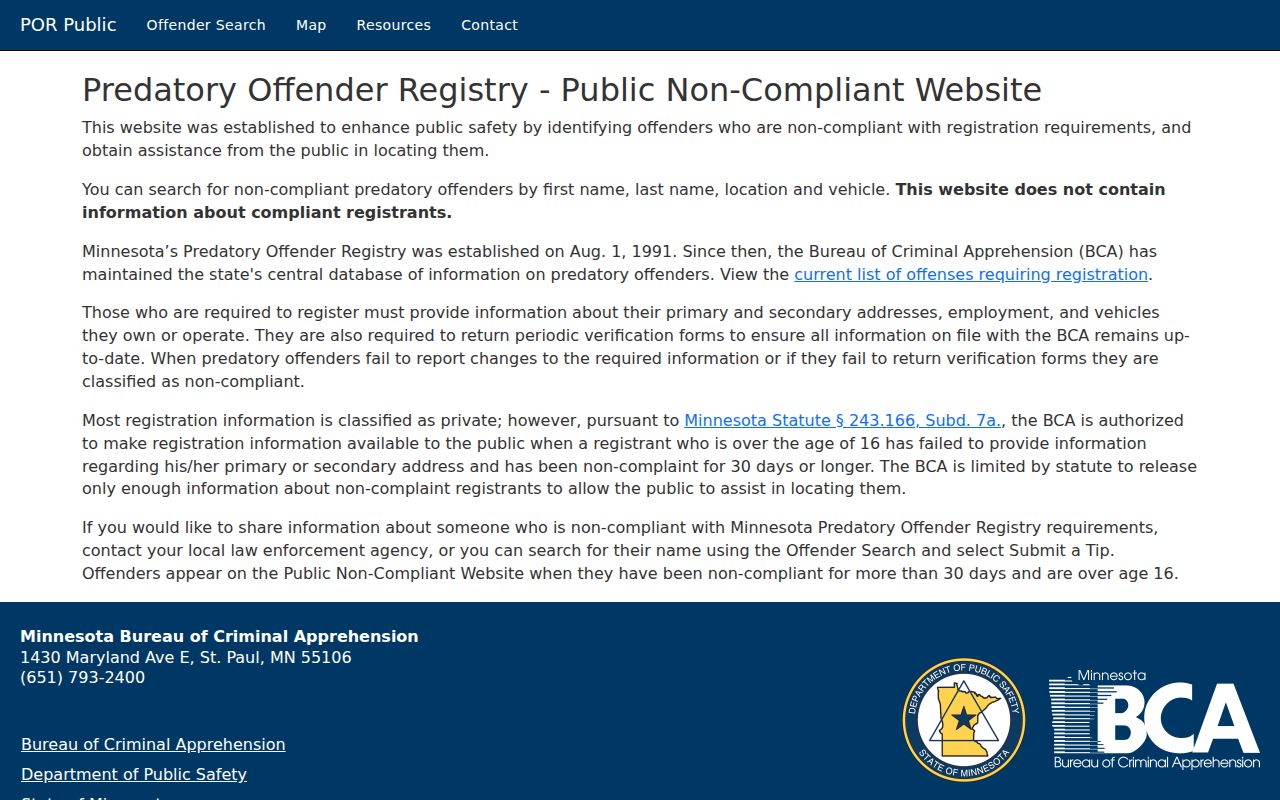
Use the visible system scope and date, rather than reading a search as a complete history. The Minnesota predatory offender public registry shown below is also narrow: public display is limited to qualifying noncompliant registrants, while much central-registry information is private. It should never be used to build a broad profile of a Duluth resident.
For a professional verification, the Minnesota Medical Board lookup shown below accepts name, city, license number, specialty, and ZIP. It may show license number, dates, status, and discipline documents. A credential result identifies a regulated license relationship, not a full Duluth resident record.
Match a license result to a name, location, and license number before treating it as the same person found in another Duluth record.
Duluth Chapter 13 Request Routes
When a public portal does not hold the needed record, make a narrow request under the Minnesota Government Data Practices Act, Minn. Stat. ch. 13. State guidance asks for a written request by mail or email to the responsible authority, a precise description, and an inspection or copy preference. St. Louis County's policy form allows inspection, copies, or both. Inspection is free; copy charges may apply when county cost exceeds $10.
Name the office, record type, date range, address or parcel if applicable, and the fields requested. Ask the custodian to identify the classification if a field is withheld and to release public portions that can be separated. The county's public-records offices are near the Duluth Courthouse, and its general number is 218-726-2000. The City Clerk, County Recorder, Assessor, Elections office, Sheriff Records, court administration, library, archives, phone support, mail and email forms each remain separate channels for their own records.
Limits on Duluth Name Research
Public access has boundaries. Chapter 13 can open a public government record while another law or classification protects a field. Court remote access has exclusions. Voter-file access is restricted. Birth records can require tangible interest. Safe at Home participant information is private, and the Driver's Privacy Protection Act restricts motor-vehicle personal information. Contact the custodian about an apparent error, correction route, or lawful redaction process instead of trying to work around an access limit.
| Official record route | What to preserve |
|---|---|
| MCRO or court administration | Search spelling, date, county, case category, and case number |
| Parcel or deed research | PIN, map date, address type, document number, and Abstract or Torrens status |
| Vital or library index | Source, date range, certificate lead, and whether an image was inspected |
Lawful use. Use Duluth resident lookup sources for lawful personal, civic, and historical research. Do not combine public fragments to stalk, harass, intimidate, or locate a protected person; Minn. Stat. §609.749 sets Minnesota's anti-stalking boundary.